
Potty Training Charts That Actually Motivate (Free Printable)
Discover which potty training chart designs work best, how to use them effectively, and when to move on. Includes free printable options parents love.
A potty training chart is one of the simplest tools in your arsenal, but only if you use it at the right time and in the right way. It won’t magically make a child ready to potty train, but for a child who’s already showing signs of readiness, it can turn abstract progress into something they can see, touch, and celebrate. Here’s how to make it work.
What Is a Potty Training Chart?
A potty training chart is a visual tracker where your child earns a sticker, checkmark, or magnet for each successful trip to the potty. The idea is simple: every success gets marked. Over days and weeks, those little stickers add up into rows, columns, or paths that your child can actually see.
The chart creates a sense of ownership. Your child isn’t just using the potty because you said so. They’re doing it to fill their chart, earn their next sticker, or reach a milestone square. That shift from external pressure to internal motivation is where the magic happens.
According to research on positive reinforcement in potty training, reward systems like charts help build confidence and encourage consistency without shame or punishment.
When to Use a Potty Training Chart
Don’t pull out the chart on day one. A chart works best once your child understands what the potty is for and has started showing readiness signs. According to the American Academy of Pediatrics, readiness includes staying dry for two or more hours, signaling when they need to go, being able to pull pants up and down, and showing interest in the bathroom.
Introduce the chart after the first few successes, not before. Once your child has used the potty a handful of times and understands the routine, then bring in the chart as a way to celebrate what they’re already doing.
If your child isn’t ready yet, check out when to start potty training or use the potty training readiness checklist to assess timing.
What Makes a Good Potty Training Chart
The best potty training charts share a few traits:
Clear and simple. Your child should understand it at a glance. Big squares or circles, bold colors, and an obvious place for the sticker.
Age appropriate. Toddlers can’t process complex reward tiers or distant goals. A chart with 5 to 7 spaces works better than one with 30. You can always print a fresh one.
Personalized. Let your child pick the theme (pirates, princesses, trucks, animals). When they feel ownership, they care more. You can even decorate the chart together before you start using it.
Visible. Tape it to the bathroom wall at your child’s eye level or stick it on the fridge. Out of sight, out of mind.
Flexible. Some kids want a sticker every time. Others want a small prize after completing a row. Build in milestones that feel exciting but not overwhelming.
For children who love aiming games, pairing a chart with a hands-on tool like Potty Pirates (fizzing, color-swirling pirate ship toilet targets) can make each trip to the potty feel like a win worth tracking.
How to Use a Potty Training Chart (Step by Step)
1. Explain the Chart
Before you stick the first sticker, show your child how it works. “Every time you pee or poop in the potty, you get to put a sticker on your chart. Let’s see how many we can collect!“
2. Let Your Child Place the Sticker
Hand them the sticker and let them stick it on. This tiny act of control reinforces the accomplishment.
3. Celebrate the Milestone
When they fill a row, make a bigger deal. A high five, a silly dance, an extra book at bedtime. Keep the rewards small and immediate.
4. Stay Consistent
Use the chart every single time for the first few weeks. Consistency is what turns the behavior into a habit.
5. Stay Calm About Accidents
If your child has an accident, skip the sticker but don’t take one away. Never scold or punish. Just say, “No sticker this time, but we’ll try again soon.”
6. Phase Out Gradually
Once your child is reliably using the potty, you can slow down or stop the chart. Some kids will naturally lose interest. Others will want to keep going. Follow their lead.
Potty Training Chart Ideas That Work
Here are a few formats parents love:
The simple grid. 5 rows, 7 columns. One sticker per success. Fill the whole sheet and earn a small prize.
The treasure map. Each sticker moves a pirate or explorer one step closer to the treasure chest. Great for kids who love adventure.
The ladder or tower. Stack stickers vertically to “climb” to the top. Visual and satisfying.
The themed board. Firefighters climbing a ladder, astronauts reaching the moon, mermaids swimming to the castle. Match the theme to your child’s current obsession.
You don’t need to buy anything fancy. A hand-drawn chart on poster board works just as well as a printed one.
Free Printable Potty Training Charts
If you want a ready-made option, here are a few printable potty training chart ideas you can download and use:
- Simple star chart: 7 days, 5 tries per day, one big star at the end of each row.
- Animal trail: Follow the bunny (or dinosaur, or truck) across 20 squares.
- Weekly tracker: One row per day, stickers for each successful potty use, bonus square for dry nights.
- Pirate adventure: Sail across the ocean, one island per success, treasure chest at the finish.
You can find free templates on parenting sites, or you can create your own in a word processor or drawing app. Let your child help color it in before you laminate or tape it up.
What to Do When the Chart Stops Working
Charts lose their magic. It’s normal. Your child might fill three in a row and then suddenly stop caring. Here’s what to do:
Switch up the reward. If stickers aren’t cutting it anymore, try stamps, checkmarks with a special marker, or magnets on a magnetic board.
Add variety. Rotate between a few different charts or themes to keep it fresh.
Introduce milestone prizes. After 10 stickers, your child picks a small toy from a treasure box or gets to choose dinner.
Acknowledge the shift. If your child is using the potty consistently, the chart has done its job. You can phase it out and celebrate the new independence.
For more ideas when traditional rewards lose steam, check out potty training sticker chart alternatives.
Common Potty Training Chart Mistakes
Starting too early. If your child isn’t ready, the chart becomes another source of pressure. Wait until readiness signs are clear.
Making the chart too complicated. If your toddler can’t understand it, it won’t motivate them.
Using the chart as punishment. Never remove stickers or withhold rewards as discipline. That creates shame, not progress.
Focusing only on outcomes. Reward effort and trying, not just successful pees or poops. Sitting on the potty and trying counts.
Forgetting to celebrate. The chart only works if you make a big deal out of progress. High fives, hugs, and excited praise matter more than the sticker itself.
Pairing a Potty Training Chart with Other Tools
Charts work even better when combined with other strategies:
- Pair the chart with hands-on tools like toilet targets for potty training to make each trip more engaging.
- Use the chart alongside potty training games for toddlers to keep motivation high.
- Combine it with screen-free potty training activities to build a full routine.
- If you’re teaching a boy to aim, a chart pairs naturally with fizzing, color-changing targets. Learn more in how to teach a boy to aim in the toilet.
For boys especially, Potty Pirates (small pirate ship tablets that fizz and swirl when you aim at them) turn every potty trip into a mini game worth tracking on a chart. The combination of instant sensory feedback and visible progress on the wall keeps kids coming back.
When to Move On from the Potty Training Chart
You’ll know it’s time to move on when:
- Your child uses the potty without prompting and doesn’t ask about the sticker.
- You forget to put the sticker up and your child doesn’t mention it.
- The chart has been full for a week and your child is staying dry consistently.
- Your child starts potty training a younger sibling or stuffed animal without needing external rewards.
At that point, you can retire the chart with a little ceremony. Put it in a memory box, take a photo, or let your child decorate it one last time. Celebrate how far they’ve come.
Potty Training Chart FAQs
Do I need a different chart for pee and poop?
Not necessarily. Most kids do fine with one chart that rewards both. If your child is peeing consistently but withholding poop, you can create a separate “poop chart” with bigger rewards. Learn more in toddler holding poop.
Should I reward every single success?
In the beginning, yes. Once the behavior is established (usually after a few weeks), you can space out rewards or shift to milestone-based prizes.
What if my child refuses to use the chart?
Don’t force it. Some kids are motivated by charts, others aren’t. Try a different approach like verbal praise, a special song, or a high-five ritual. Explore more in potty training reward ideas.
Can I use a potty training chart for nighttime dryness?
Nighttime dryness is a separate developmental milestone that happens later and isn’t something you can train. Learn more in nighttime potty training guide.
The big idea: A potty training chart works best when your child is already showing readiness and you use it to celebrate progress, not create pressure. Keep it simple, visible, and fun, and don’t be afraid to move on when the magic fades.
Sources
Frequently asked questions
A potty training chart is a visual tracking system where your child earns a sticker, checkmark, or star for each successful toilet use. It creates a sense of ownership over the process and lets your child see progress build up over time. The chart works through positive reinforcement, building confidence and encouraging consistency without pressure or shame.
Start using a chart only after your child shows readiness signs like staying dry for two hours, signaling when they need to go, and showing interest in the bathroom. Most children are ready between 18 and 30 months, but readiness varies. Introducing a chart too early can add pressure before your child is physically or emotionally ready.
When the chart stops motivating, it's done its job. Many children lose interest after a few weeks once the behavior becomes routine. You can switch to a different reward system, add surprise bonuses for milestone rows, or phase out rewards altogether by celebrating the independence itself.
The same chart structure works for all children, though you can personalize the theme to match your child's interests (dinosaurs, mermaids, trucks, animals). What matters most is clarity, simplicity, and a design your child gets excited about. Skip gendered themes if they don't resonate with your child.
Make potty training the part of the day they ask for
- A fleet of fizzing, color-changing pirate ships
- Aim-and-dissolve target practice in every bowl
- Non-toxic formula that cleans as it plays
- The whole collectible crew to discover
We'll email you the moment we launch on Kickstarter. No charge today.
Make potty training the adventure they ask for
Reserve your spot for early access and founding-crew pricing. No payment today.
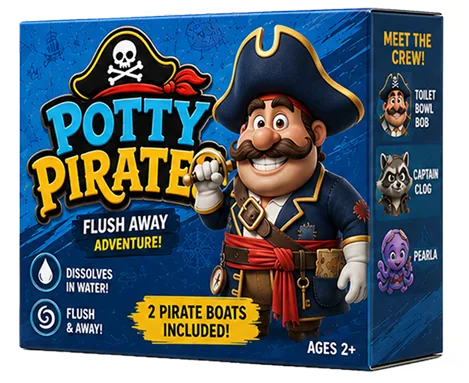
Captain Bob Edition
- A fleet of fizzing, color-changing pirate ships
- Aim-and-dissolve target practice in every bowl
- Non-toxic formula that cleans as it plays
- The whole collectible crew to discover
We'll email you the moment we launch on Kickstarter. No charge today.