Toilet Targets for Potty Training: What Works and Why
Turn potty training into a game with toilet targets. Learn which types work best, how to introduce them step by step, and tips to keep aiming fun for toddlers.
You’re three weeks into potty training, the bathroom floor is still a splash zone, and your toddler thinks the toilet is just a really boring chair. Sound familiar? Toilet targets for potty training can flip that script by turning aim practice into something your child actually wants to do.
This guide walks you through exactly how to choose, introduce, and use toilet targets to make potty training feel more like playtime and less like a chore.
Why toilet targets work
Toilet targets tap into something toddlers already love: games. When you ask a two-year-old to “aim into the toilet,” you’re giving vague instructions about an abstract concept. But when you say “hit the pirate ship,” suddenly they have a mission.
Targets make aiming concrete. Instead of guessing where to direct their stream, kids get a clear focal point. The instant feedback (a fizz, a color change, a hit) tells them they succeeded.
They reduce power struggles. The American Academy of Pediatrics emphasizes that toilet training should be led by the child’s readiness and motivation, not parental pressure. Targets shift the dynamic from “do this because I said so” to “let’s see if you can hit the target.”
And they work especially well for active, visually-driven toddlers who need a little extra incentive to slow down and focus. If you’re looking for more ways to keep things playful, check out our guide on how to make potty training fun.
Step 1: Make sure your child is ready
Before you introduce any toilet target, confirm your child is developmentally ready to start potty training. According to the Mayo Clinic, readiness is more important than age.
Look for these signs:
- Stays dry for at least two hours at a time
- Signals when they need to go (tugging pants, squatting, hopping)
- Can follow simple instructions
- Shows interest in the toilet or potty chair
- Can pull pants up and down
If your child isn’t checking most of these boxes yet, hold off on targets for now. The American Academy of Pediatrics notes that children should understand basic bathroom concepts (words like “pee,” “poop,” and “potty”) before moving to hands-on training.
For a full checklist, visit our potty training readiness guide.
Step 2: Choose the right type of toilet target
Not all toilet targets are created equal. Here’s what’s out there and what to consider.
Stickers and decals
Adhesive targets that stick to the inside of the toilet bowl. They’re inexpensive and reusable, but they don’t offer any sensory feedback beyond the visual.
Best for: Kids who respond well to visual cues alone and families on a tight budget.
Downside: They can peel off, collect grime, and lose their novelty quickly.
Floating targets
Small plastic objects (often shaped like boats or animals) that float on the water’s surface. They move when hit, which adds a bit of feedback.
Best for: Kids who enjoy cause-and-effect play.
Downside: Parents have to fish them out of the toilet after every use, which can feel unsanitary. As one parent on Reddit put it, “No one wants to reach their hands into a toilet and pull something out.”
Fizzing, dissolving tablets
Drop-in targets that react to urine with fizzing, color-swirling, and dissolving. They’re single-use, biodegradable, and offer multi-sensory feedback (sight, sound, sometimes scent).
Best for: Kids who need a bigger “wow” factor to stay motivated. The chemical reaction provides instant confirmation that they hit the mark.
Downside: They’re consumable, so you’ll need to restock. But the trade-off is no cleanup and no touching.
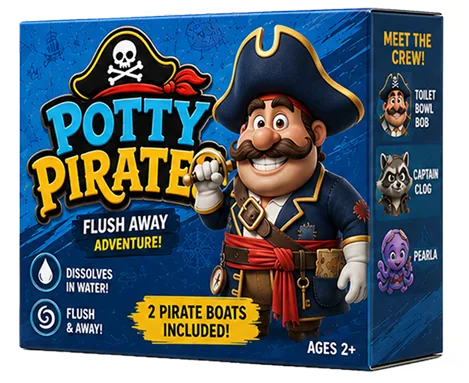
This is where Potty Pirates fits in. These small pirate-ship tablets turn every trip to the toilet into a mini science experiment: aim, fizz, watch the color swirl, and see the ship dissolve. They’re non-toxic, biodegradable, and designed to clean the bowl as they disappear. No fishing, no scrubbing, just drop one in and let the game begin.
For more on the science behind fizzing targets, read Color-Changing Potty Tablets: The Science Kids Love.
Motion-activated lights
Battery-powered lights that project a target or glow when motion is detected. They’re mounted on the rim or inside the bowl.
Best for: Nighttime trips and tech-loving families.
Downside: Batteries need replacing, and some kids find them distracting rather than helpful.
Pick what matches your child’s personality. Visual learners may do fine with a sticker. Sensory seekers will want the fizz.
Step 3: Introduce the target with enthusiasm
Don’t just toss a target in the toilet and walk away. Make the introduction feel special.
Build excitement. Show your child the target before you put it in. If it’s a pirate ship, say, “Look, a pirate ship is sailing into our toilet! Can you aim your pee right at it and make it fizz?”
Demonstrate (if possible). If you have an older sibling or a willing co-parent, let your toddler watch someone else “hit the target” first. Modeling is a powerful teaching tool, as the American Academy of Pediatrics points out.
Keep it light. Frame it as a game, not a test. Say, “Let’s see what happens!” instead of “You need to hit this.”
If your child is hesitant about sitting on the potty in the first place, revisit our post on what to try when your toddler won’t sit on the potty.
Step 4: Coach the basics of aiming
Targets only work if your child understands how to aim. This is especially important for boys learning to pee standing up.
Start sitting down. Even for boys, sitting is easier at first. It reduces variables and lets them focus on hitting the target without worrying about balance. Once they’ve mastered sitting, you can transition to standing.
Use simple language. Say, “Point your penis down at the pirate ship” or “Aim right at the circle.” Avoid vague instructions like “go in the potty.”
Stand close (at first). Gently guide their hips or hands to help them aim during the first few tries. Then step back and let them practice independently.
For a full breakdown of aiming techniques, check out our guide on how to teach a boy to aim in the toilet.
Step 5: Celebrate hits and stay calm about misses
When they hit the target:
- Cheer! Clap, high-five, do a little dance.
- Describe what happened: “You hit the pirate ship and it started fizzing! Look at the colors!”
- Let the sensory feedback do some of the work. The fizz and swirl are rewarding on their own.
When they miss:
- Stay neutral. Say, “Nice try! Let’s aim a little lower next time.”
- Never scold, shame, or show frustration. The Mayo Clinic is clear: punishment has no role in potty training.
- Offer a do-over if they’re willing. Drop in a fresh target and say, “Want to try again?”
If your child is struggling with motivation in general, explore our collection of potty training games toddlers beg to play.
Step 6: Use targets strategically, not constantly
Targets are a tool, not a crutch. Use them to build skills and confidence, then phase them out gradually.
In the beginning: Use a target for every toilet trip to establish the habit and keep things fun.
After a few weeks: Start mixing it up. Use a target for morning pee, but not after nap time. This prevents dependency.
Once aiming is solid: Use targets only as a special treat or when motivation dips. Your child should be able to aim without a visual aid eventually.
Some families keep a stash on hand for regression periods (after a new sibling arrives, during travel, etc.). That’s perfectly fine.
Step 7: Keep it safe and sanitary
Safety and cleanliness matter, especially with products going into the toilet.
Choose non-toxic, biodegradable targets. If your child touches one (and toddlers touch everything), it shouldn’t be harmful. Potty Pirates tablets are food-grade and safe if handled, though not meant for eating.
Wash hands every time. Make handwashing a non-negotiable part of the routine, target or no target.
Skip anything with small parts. Floating toys with detachable pieces can be choking hazards.
Check for residue. Some color-changing products leave dye in the bowl. If that bothers you, choose dissolving options that rinse away completely.
Step 8: Troubleshoot common target problems
”My child just wants to play with the target, not use it.”
Set a clear rule: “The pirate ship only goes in when you’re ready to pee. If you’re not ready, we’ll save it for later.” Hold the target until they’re sitting and ready to go.
”The target isn’t motivating anymore.”
Novelty wears off. Rotate between different types (sticker one day, fizzing tablet the next). Or take a break from targets entirely for a few days, then reintroduce them.
”My child is scared of the fizzing sound.”
Start with a silent sticker or decal. Once they’re comfortable with the concept of aiming, introduce fizzing targets gradually. Let them drop one in and watch it fizz without sitting on the toilet first. Familiarity reduces fear.
”Aiming is going great, but my child won’t poop in the toilet.”
Aiming targets help with pee, not necessarily poop. Pooping involves different readiness cues and sometimes different fears. For more strategies, visit our potty training methods comparison to find an approach that addresses both.
When to skip toilet targets altogether
Targets aren’t for everyone. Skip them if:
- Your child is terrified of the toilet. Address the fear first with gradual exposure and a potty chair.
- They’re already aiming perfectly. Some kids just get it right away. Don’t add complexity if it’s not needed.
- You’re working with a child with sensory sensitivities. The fizzing, swirling, or colors might be overwhelming rather than fun. Trust your instincts and your child’s cues.
If your family leans toward a child-led potty training method, you might find that targets feel too directive. That’s okay. Use what works for your child’s temperament and your parenting style.
The bigger picture: Targets are one piece of the puzzle
Toilet targets can absolutely make potty training easier and more fun, but they’re not magic. The foundation of successful potty training is still readiness, consistency, patience, and a pressure-free environment.
Pair targets with:
- A predictable bathroom routine (after meals, before bed, etc.)
- Positive reinforcement (praise, stickers, high-fives)
- Plenty of practice and time
- A calm, supportive attitude when accidents happen
If you’re potty training a boy, you’ll find additional tips in our guide on how to potty train a boy. And if you want even more ways to keep things engaging, browse our full collection of ideas in the fun section.
The big idea: Toilet targets turn aiming from an abstract instruction into a playful challenge, giving toddlers a clear goal and instant feedback that makes potty training feel more like a game and less like a chore.
Sources
Frequently asked questions
Toilet targets are visual aiming aids placed in the toilet bowl to make potty training more engaging, especially for boys learning to aim. They range from simple stickers to fizzing tablets that create color changes and dissolve on contact with urine. The goal is to transform an abstract skill into a concrete, game-like activity.
Yes, toilet targets can make the process more engaging by giving toddlers a clear focal point and turning bathroom trips into a game. They work best when paired with positive reinforcement and patience. The American Academy of Pediatrics emphasizes that successful potty training depends on readiness, consistency, and keeping the experience positive, and targets can support that by adding an element of fun.
The best toilet targets are safe, visually engaging, and easy to use. Look for non-toxic, biodegradable options that create instant feedback, like color-changing or fizzing tablets. Avoid anything with small parts that could be a choking hazard or designs that are complicated to clean up.
Introduce toilet targets once your child shows signs of readiness, typically between 18 months and 3 years. The American Academy of Pediatrics notes that most children in the United States are bowel and bladder trained by age 4, but readiness varies. Wait until your child can follow simple instructions, shows interest in the toilet, and has some bladder control before adding targets to the routine.
Make potty training the part of the day they ask for
- A fleet of fizzing, color-changing pirate ships
- Aim-and-dissolve target practice in every bowl
- Non-toxic formula that cleans as it plays
- The whole collectible crew to discover
We'll email you the moment we launch on Kickstarter. No charge today.
Make potty training the adventure they ask for
Reserve your spot for early access and founding-crew pricing. No payment today.
Captain Bob Edition
- A fleet of fizzing, color-changing pirate ships
- Aim-and-dissolve target practice in every bowl
- Non-toxic formula that cleans as it plays
- The whole collectible crew to discover
We'll email you the moment we launch on Kickstarter. No charge today.