Potty Training Rewards That Aren't Candy (And Work Better)
Discover creative potty training reward ideas that skip the sugar but keep the motivation high. From sticker charts to fizzing toilet targets, here's what works.
When you’re knee-deep in potty training, it’s tempting to reach for the candy jar. One chocolate chip per successful trip seems harmless, right? But those sweets add up fast, and most kids need weeks (or months) to master the potty. The good news: plenty of potty training reward ideas work just as well as candy, without the sugar crash or the habit you’ll need to break later.
Here’s what actually motivates toddlers, keeps the process positive, and won’t leave you scraping dried marshmallow off the bathroom floor.
Why Skip the Candy?
Before we dive into alternatives, let’s talk about why food rewards can backfire.
Using sweets as potty training rewards can shift your child’s focus from internal motivation to external treats. According to pediatrician guidance, while positive reinforcement with treats can be effective short term, it should only last about a month at most. The American Heart Association recommends children over age 2 consume no more than 6 teaspoons (25 grams) of sugar daily, about one cup of apple juice. A few jelly beans per bathroom trip quickly maxes that out.
More importantly, putting sweets on a pedestal can create an unhealthy relationship with food. When desserts are only earned through specific behaviors, kids can become preoccupied with sugar and lose their natural ability to self-regulate eating.
But positive reinforcement absolutely works for potty training. You just need rewards that motivate without the downsides.
Sticker Charts (The Classic That Still Works)
Sticker charts remain one of the most effective potty training reward ideas because they give toddlers immediate visual feedback and a tangible sense of accomplishment.
Here’s how to make sticker charts work:
Let your child choose their stickers. Head to the store together and pick out their favorite characters, animals, or sparkly designs. Ownership matters.
Place the chart at their eye level in or near the bathroom where they’ll see it every time. Each success gets an immediate sticker, ideally placed by your child’s own hand.
Add milestone rewards. After three to five stickers, offer a small prize like a trip to the playground, extra story time, or a small toy. As your child builds confidence, gradually increase the number of stickers needed before the next reward.
The visual element helps toddlers track their progress in a way that abstract praise can’t quite match. Plus, stickers work for potty training games you might already be playing.
Treasure Chest of Small Toys
A bathroom treasure chest turns every potty success into a mini celebration without sugar or screen time.
Fill a decorated shoebox or small plastic container with inexpensive trinkets: finger puppets, mini cars, kazoos, bubbles, small coloring books, plastic animals, or anything from the dollar store that fits your child’s interests. After each successful trip, they get to pick one item.
The key is variety and surprise. Not knowing exactly what they’ll get next keeps the excitement high. You’re not spending much per item, but the novelty factor does the motivational heavy lifting.
Some parents report finger puppets being particularly popular, probably because they’re small enough to feel special but also immediately playable. Keep the treasure chest stocked and let your child watch you add new items occasionally to build anticipation.
Verbal Praise and Physical Affection
Never underestimate the power of genuine enthusiasm from the person your toddler loves most.
Make your praise specific and immediate. Instead of just “good job,” try “You listened to your body and made it to the potty! That’s amazing!” or “Wow, you pulled your pants down all by yourself!”
Add physical celebration: high-fives, victory dances, hugs, or your own silly potty song. Your toddler wants to make you proud. Sometimes that’s reward enough.
Keep it pressure-free. When accidents happen (and they will), simply say “That’s okay, we’ll try again next time. I love how hard you’re trying.” Never shame or punish. The goal is building confidence, not fear.
Target Practice Games
For kids who respond well to teaching boys to aim, turning the toilet into a game can be its own reward.
Floating targets like cereal pieces or toilet targets designed for potty training give kids something to aim at, which makes the whole process more engaging. Some parents use washable targets that stick to the bowl, others drop in a few pieces of colored cereal.
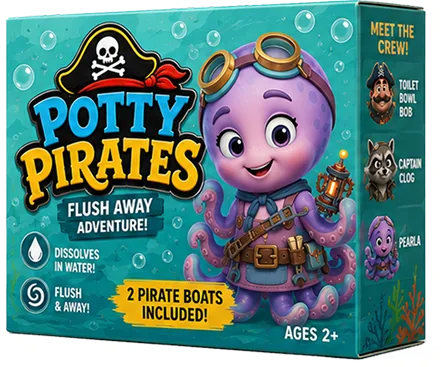
Potty Pirates takes this concept further with fizzing, color-changing pirate-ship tablets you drop in the toilet bowl. When your child aims and hits the target, the tablets fizz, swirl with color, and dissolve (while cleaning the bowl in the process). The immediate visual feedback turns every bathroom trip into a mini science experiment. It’s not about bribing with treats afterward; the activity itself becomes the motivation. Many parents find this approach particularly effective for kids who need more than verbal praise to stay engaged, especially when combined with other ways to make potty training fun.
The advantage of game-based rewards is they’re built into the process itself. Your child isn’t waiting for a treat afterward; they’re genuinely engaged in the moment.
Special Privileges and Activities
Time-based or experience-based rewards often outlast any trinket or sticker in your child’s memory.
Try these privilege-based potty training reward ideas:
Extra story time. Add one more book to the bedtime routine for every successful potty day. Reading together strengthens your bond while rewarding progress.
Playground trips. “When you use the potty five times, we’ll go to your favorite park” gives your child something concrete to work toward.
Special one-on-one time. Baking cookies together, building a blanket fort, or an extra 15 minutes of play before bed can be more meaningful than any physical reward.
Stay-up-late passes. An extra 10 minutes before bedtime feels like a huge privilege to a toddler.
Choice power. Let your child pick what’s for snack, which pajamas to wear, or what show to watch. Autonomy is incredibly motivating at this age.
These rewards work especially well for kids who are past the novelty of stickers but still need external motivation.
Healthy Snack Alternatives
If you want to stick with food rewards but skip the sugar spike, plenty of healthy options still feel special to toddlers.
Try these instead of candy:
Pretzels or crackers shaped like fun things. Animal crackers, fish-shaped crackers, or alphabet pretzels feel more like treats than health food.
Raisins or dried fruit. Small boxes of raisins or a few pieces of dried mango have natural sweetness but more nutrition.
Popcorn. Air-popped or lightly salted popcorn feels like a snack kids only get at special times.
Cheese cubes or string cheese. Some kids love the ritual of peeling string cheese, making it feel more reward-like.
Fresh berries. A small bowl of strawberries or blueberries can feel indulgent without added sugar.
The key is keeping portions small and time-limited. You don’t want snacks to replace meals or extend the reward system longer than necessary. Most experts suggest phasing out all tangible rewards within a month, relying more on praise as your child gains confidence.
Building Block Towers
For kids who love to see their progress physically grow, building block rewards work beautifully.
Here’s how it works: Keep a container of blocks (Legos, wooden blocks, or anything stackable) in the bathroom. Each successful potty trip earns one block. Your child adds it to their growing tower immediately.
The visual representation of success is powerful. Your toddler can literally see their achievement getting bigger every day. When the tower reaches a certain height, celebrate with a special activity or small prize.
This method combines immediate gratification (adding the block right away) with longer-term goal setting (building toward the complete tower). It’s particularly effective for kids who might be overwhelmed by abstract concepts like “being a big kid” but can understand “make tower taller.”
Potty Training Passport or Chart
Create a more elaborate tracking system that feels like an adventure rather than a checklist.
Some parents make a “potty training passport” where each bathroom success earns a stamp or sticker in a small booklet. Different bathrooms (home, grandma’s house, the store) can earn different stamps. After filling a page, your child “travels” to a new milestone and gets a corresponding reward.
Others create themed charts around their child’s interests: construction vehicles earning tools, dinosaurs collecting eggs, or princesses gathering jewels. Each successful trip advances the story.
This approach works especially well if you’re already using potty training methods that emphasize routine and consistency. The chart becomes part of the ritual.
Face-Timing or Calling Someone Special
For socially motivated kids, sharing their success with someone they love can be the ultimate reward.
After a successful potty trip, let your child call or video chat with grandparents, aunts, uncles, or other special people to share the news. Most relatives are more than happy to offer enthusiastic congratulations.
Some parents schedule a quick “potty update” call each evening so the child has something to look forward to. The anticipation of sharing good news becomes its own motivator.
This approach costs nothing, strengthens family connections, and gives your child practice with social skills and technology (under supervision, of course).
DIY Prize Wheel
Make choosing the reward part of the fun by creating a simple prize wheel your child can spin after each success.
Cut a circle from cardboard, divide it into wedges, and write or draw different rewards in each section: “extra story,” “dance party,” “sticker,” “toy from treasure chest,” “pick dinner,” etc. Attach it to the wall with a brad fastener and add a pointer.
After using the potty successfully, your child spins to see what they’ve won. The element of chance keeps things exciting, and you can adjust the wheel’s options as your child progresses and certain rewards lose their appeal.
This works particularly well for kids who respond to potty training games for toddlers, as the wheel itself feels playful.
Marble or Token Jars
Similar to building blocks but more portable, token systems let kids collect small items that eventually add up to a bigger reward.
Give your child a marble, poker chip, pom-pom, or other small token after each potty success. They drop it into a clear jar where they can see their collection growing. When the jar reaches a marked line or fills completely, they earn a larger reward like a trip somewhere special, a new book, or a small toy.
The clear container is key. Being able to see their progress accumulating is motivating in itself, and it helps toddlers grasp the concept that small efforts add up to big achievements.
Just make sure tokens are large enough to be safe, and supervise when your child is handling them.
Special Potty Songs or Dances
Create a unique celebration that only happens after potty successes, turning the reward into a fun ritual rather than a thing.
Some families make up silly potty songs with their child’s name in them. Others have a special “potty dance” with specific moves that get sillier over time. The key is making it consistent so your child knows this celebration is specifically for this achievement.
Physical celebration releases happy brain chemicals and creates positive associations with using the toilet. Plus, you’re making memories together rather than accumulating more plastic toys.
This approach pairs beautifully with verbal praise and costs absolutely nothing.
Photo Documentation
For kids who love seeing themselves, creating a “potty training album” can be surprisingly motivating.
Take a photo of your child after successful trips (not during, obviously) or have them pose next to their sticker chart showing their progress. Print the photos or keep them in a digital album your child can look through.
Seeing themselves as the hero of their own potty training story helps kids internalize the achievement. They’re not just doing this for a sticker; they’re documenting themselves growing up.
Some parents make this even more special by creating a simple photo book once training is complete, which becomes a keepsake your child can look back on years later.
How to Phase Out Rewards
No matter which potty training reward ideas you choose, the goal is eventually using the toilet without external motivation.
Here’s how to transition:
Start with immediate rewards for every success, then gradually move to rewarding only when your child initiates bathroom trips themselves.
Slowly increase the interval. Instead of a sticker every time, offer one for three successful trips, then five, then a whole successful day.
Replace tangible rewards with verbal praise and natural consequences. Help your child notice how good it feels to be dry, wear big-kid underwear, or not interrupt playtime for diaper changes.
Celebrate mastery, then move on. Once your child is consistently using the toilet, have a “graduation party” to acknowledge their achievement, then retire the reward chart or treasure chest.
Most kids naturally lose interest in rewards once the behavior becomes routine. If your child seems stuck or regresses, revisit your potty training readiness checklist to make sure they’re truly ready, or consider whether something else (stress, a new sibling, illness) might be interfering.
Matching Rewards to Your Child
The best potty training reward ideas are the ones that match your child’s personality and interests.
If your toddler is tactile and loves collecting things, tokens or stickers might work beautifully. If they’re social and praise-motivated, enthusiastic verbal celebrations and phone calls to grandma might be enough. If they need more sensory engagement, game-based rewards like color-changing potty tablets or floating targets might keep them interested.
Pay attention to what already motivates your child in other areas. What gets them excited? What makes them feel proud? What do they beg for? Build your reward system around those natural interests.
And remember: potty training is a process, not a race. Some kids respond immediately to any reward system; others need time to develop physical readiness and emotional maturity. If your toddler won’t sit on the potty despite your best reward efforts, they might simply need more time.
Be patient with yourself and your child. You’re both learning.
The big idea: The best potty training rewards tap into what already motivates your child, whether that’s stickers, special privileges, game-based targets, or just your genuine pride in their progress, and all work better long-term than candy.
Sources
Frequently asked questions
Sticker charts, small toys like finger puppets, extra playtime, story time, and verbal praise all work beautifully. Physical rewards like toilet targets (including fizzing tablets) turn the process into a game without sugar. Many parents find these non-food rewards more sustainable and just as motivating.
Most experts recommend keeping any reward system short term, ideally no more than a month. Once your child starts using the potty consistently, gradually phase out tangible rewards and rely more on verbal praise and natural pride in their accomplishment.
Yes, sticker charts work well for many toddlers because they provide immediate visual feedback and a sense of accomplishment. Let your child place the sticker themselves, and consider offering a small prize after they earn a certain number to keep momentum going.
Focus on rewarding effort and successes, not punishing accidents. Praise every genuine attempt, and save bigger rewards for actual successes. This keeps the experience positive and builds confidence without creating anxiety around performance.
Make potty training the part of the day they ask for
- A fleet of fizzing, color-changing pirate ships
- Aim-and-dissolve target practice in every bowl
- Non-toxic formula that cleans as it plays
- The whole collectible crew to discover
We'll email you the moment we launch on Kickstarter. No charge today.
Make potty training the adventure they ask for
Reserve your spot for early access and founding-crew pricing. No payment today.
Pearla Edition
- A fleet of fizzing, color-changing pirate ships
- Aim-and-dissolve target practice in every bowl
- Non-toxic formula that cleans as it plays
- The whole collectible crew to discover
We'll email you the moment we launch on Kickstarter. No charge today.