
Potty Training in Public Restrooms Without the Meltdowns
Public restrooms during potty training feel impossible. Here's how to handle the noise, germs, logistics, and fear without accidents or tears.
You’ve worked so hard to get your toddler comfortable using the potty at home. Then you leave the house, and suddenly everything falls apart. Potty training in public restrooms brings a whole new set of challenges: the noise, the germs, the size of the toilet, and the fact that your child now has to perform on demand in a strange, overstimulating place.
Public bathrooms are legitimately harder. But with a little preparation and a lot of patience, you can help your child make this transition without the panic and accidents.
Why public restrooms are so hard for toddlers
Public restrooms are sensory chaos. Sounds echo off tile walls. Hand dryers roar at toddler ear-level. Toilets flush unpredictably, and the automatic ones sometimes go off while your child is still sitting. It’s loud, it’s echoey, and it’s genuinely scary for little kids.
The toilets themselves are intimidating. Adult-sized toilets are huge when you’re two feet tall. Your child’s legs dangle, they can’t touch the floor, and the opening feels enormous. To stay balanced, small toddlers often need to straddle the seat, which means more skin contact and a very different position than their potty chair at home.
Germs are real, and you’re probably stressed about them. It’s hard to stay calm when your toddler grabs the flush handle, leans forward to peer into the bowl, or puts their hands on the seat. Your own anxiety can bleed into the moment, making your child feel like they’re doing something wrong just by being there.
Everything takes longer than you think. You’re crouching in a cramped stall, holding your child steady, singing encouragement, blocking them from touching the toilet paper dispenser, and mentally calculating whether you locked the car. Meanwhile, your toddler is taking their time because they’re distracted, nervous, or just not sure they actually need to go.
This is all normal. Public restrooms are a big developmental leap, and expecting your newly potty-trained child to handle them smoothly right away isn’t realistic.
Start slow: practice in safe, familiar bathrooms
Don’t begin with a crowded airport restroom. Your child’s first experiences with new toilets should happen in calm, predictable places. Start by visiting the bathroom at a friend’s house, grandma’s place, or a quiet library. Single-stall bathrooms are ideal because there’s less noise and no strangers in the next stall.
Normalize the idea that toilets exist everywhere. When you pass a bathroom at a coffee shop or small store, mention it. “Look, they have a potty here too. Everyone needs bathrooms.” This plants the seed that using unfamiliar toilets is just part of life.
Let your child explore when there’s no pressure. If you’re at a park and your child doesn’t need to go yet, you can still walk into the restroom together, look around, and talk about what’s different from home. Familiarity reduces fear.
Once your child has used a handful of different bathrooms successfully, you can gradually introduce busier, noisier ones. But there’s no rush. Slow acclimation prevents the kind of fear that leads to holding it in or refusing to go at all.
Gear that actually helps
A foldable toilet seat reducer makes the opening smaller and less scary. These lightweight inserts fit in your purse or diaper bag and give your child a stable, appropriately sized place to sit. They also create a barrier between your child’s skin and a public seat.
Disinfecting wipes are non-negotiable. Wipe down the seat and the flush handle before your child enters the stall. It won’t make the toilet sterile, but it helps you stay calm, and that matters more than you think.
Post-it notes or painter’s tape can cover automatic flush sensors. If the toilet flushes while your child is sitting on it, you may be done with public bathrooms for weeks. One small piece of tape prevents that trauma.
A change of clothes in your bag is backup peace of mind. Accidents happen, especially in the early months. Having a spare outfit and a plastic bag for wet clothes means you’re not stuck panicking in a parking lot.
For boys just learning to aim, a red solo cup can work as a portable toilet. It sounds makeshift, but some parents swear by it. Your child can pee into the cup in the stall (or even outside the restroom door if needed), then you dump it in the toilet. This trick can also work for girls with a little creativity and practice. If your son is still working on aim at home, you might find our guide on how to teach a boy to aim in the toilet helpful before tackling public restrooms.
A portable potty in the car is a lifesaver in the early weeks. Yes, it’s one more thing to carry. But when your toddler announces they need to go right now and you’re 10 minutes from the nearest restroom, you’ll be grateful. Most parents phase this out after a few months once their child gets comfortable with public toilets.
Managing the logistics: what actually happens in the stall
Get your child ready before you open the stall door. If they need help unbuttoning pants or pulling down a zipper, do that outside the stall where there’s more room to maneuver. Once you’re inside, space is tight.
For small toddlers, plan to take pants and shoes off completely. Adult toilets aren’t sized for toddlers. To sit safely without falling in, many young children need to straddle the seat with their legs wide. That’s hard to do with pants bunched around the ankles. Yes, this means their bare feet are on a public restroom floor. Socks stay on. You’ll forget about the germy socks later when you put them down for a nap, but that’s a problem for future you.
Position yourself so you can support your child without blocking the door. Crouch beside the toilet (not in front of it, where you’ll get splashed). Keep one hand on your child’s back or side so they feel stable. Your thighs will ache. Your knees will complain. This is the price of potty training in public.
Let them hold the sides of the seat. Yes, their hands are touching a public toilet. You’ve already wiped it down. This is okay. They need something to grip for balance, and forbidding them to touch anything will only make them more anxious.
Don’t rush. Your child can feel your impatience. If they sense you’re stressed or hurried, they’ll tense up, which makes it even harder to go. Take a breath. Sing a song. Pretend you have all the time in the world, even if you don’t.
Praise the effort, even if nothing happens. “You sat on the big potty! That was brave.” If your child tries but can’t go, that’s still progress. Don’t show frustration. Just say, “That’s okay, we can try again later,” and head out to your car where the backup potty is waiting.
Handling the sensory nightmare
Prepare your child for the noise before you go in. “This bathroom might be loud. There might be hand dryers and toilets flushing. I’ll be right next to you the whole time.” Naming what’s coming reduces the shock.
For sensory-sensitive kids, bring noise-reducing headphones or earmuffs. Some parents keep a pair in the diaper bag specifically for restroom trips. If the sound is overwhelming, this can be the difference between success and a full meltdown.
Cover the automatic flush sensor immediately. Stick a Post-it note over it the second you enter the stall, before your child even gets near the toilet. If you forget and the toilet flushes mid-stream, your child may refuse to use public restrooms for months.
Choose the quieter times and places when you can. Avoid restrooms during peak hours if possible. A Tuesday morning at the grocery store is a very different experience than a Saturday afternoon at a mall.
Don’t invalidate their fear. If your child says the bathroom is scary, believe them. Saying “it’s not scary” or “you’re fine” doesn’t help. Instead, try: “I know it’s really loud in here. That can feel scary. I’m going to stay right next to you.”
Making public restrooms less frightening is about empathy, not logic. You’re not trying to convince your child the restroom isn’t scary. You’re helping them do something hard while scared, and that’s a much bigger skill.
What to do when accidents happen anyway
Accidents in public are inevitable. Your child will misjudge how much time they have, or freeze in fear and not make it to the toilet, or simply get too distracted. It’s not a failure. It’s part of the process.
Stay calm. Your reaction in this moment teaches your child whether accidents are shameful or just something to clean up. Keep your voice neutral. “Oops, you had an accident. Let’s get you into dry clothes.”
Clean up quickly and matter-of-factly. Use the spare outfit in your bag. If you’re in a store, don’t feel obligated to announce it to staff unless there’s a mess that needs attention. Most parents have been there. No one is judging you as much as you think they are.
Don’t punish or lecture. Shame doesn’t speed up potty training. It just makes your child afraid to tell you the next time they need to go.
Adjust your expectations for next time. If your child had an accident because they were too scared to use the public restroom, that’s information. Maybe they need more practice in quieter bathrooms first, or maybe they need the backup car potty for a few more weeks.
If you’re dealing with frequent accidents even at home, our post on potty trained but having accidents again can help you troubleshoot what’s going on.
When fear becomes refusal
Some kids adapt to public restrooms in a few tries. Others dig in and refuse. If your child is terrified, don’t force it. Pushing them onto a public toilet when they’re genuinely scared can backfire into a full potty training regression.
Keep the portable potty as a backup for as long as you need it. There’s no rule that says you have to phase it out by a certain age. If your child will happily use the car potty but melts down in a public restroom, use the car potty. You’re not “giving in.” You’re honoring where your child is developmentally.
Gradually expose them to easier public restrooms. Start with single-stall bathrooms in quiet places. Let them come into the restroom with you when you need to go, so they can see that it’s safe and you’re not scared. Some parents even practice sitting on the public toilet fully clothed, just to get used to the size and feel.
Celebrate tiny steps. Walking into a public restroom without crying is progress. Sitting on the toilet and trying, even if nothing comes out, is progress. Waiting until you get back to the car is progress. Don’t measure success only by whether pee ends up in a public toilet.
If your child’s fear is extreme or if they’re holding urine or stool to avoid using unfamiliar bathrooms, that’s worth discussing with your pediatrician. For more on fear-based refusal, see our guide on toddlers who are afraid of the toilet.
Making it feel like less of a chore
Turn public restrooms into mini adventures when you can. “Let’s see what color the walls are in this bathroom.” “I wonder if this one has a hand dryer or paper towels.” Curiosity reduces anxiety.
Some kids respond well to toilet targets. If you’re out and about and your child is hesitant, pulling a Potty Pirates fizzing pirate-ship tablet from your bag and dropping it in the toilet can turn a scary moment into a game. The tablet fizzes, swirls color, and gives your child something specific to aim at, which can be just the distraction they need to relax and go. It’s screen-free, biodegradable, and works in any toilet, so it travels well.
Let your child flush (if they want to). Lots of kids love this part. If the noise doesn’t bother them, let them press the handle or wave their hand over the sensor. It gives them a sense of control and makes the whole experience feel more fun.
Offer a small reward afterward, especially in the early weeks. Not for successfully peeing, but for the effort of using a public restroom when it felt hard. A sticker, a high-five, or a few extra minutes at the playground can reinforce that trying new bathrooms is worth it. If you’re looking for non-food motivators, check out our post on potty training reward ideas.
What about hygiene?
Your child will touch things. Make peace with it now. You can minimize the worst offenders (the floor, the trash can), but you can’t prevent every touch without turning the whole experience into a tense, stressful ordeal.
Wash hands thoroughly afterward. This is the most important hygiene step. Soap, warm water, and a full 20-second scrub. If your child is too short to reach the sink, lift them up or bring a step stool if the restroom allows it.
Use hand sanitizer as a backup. If the sink is broken or your child is melting down and you need to leave immediately, hand sanitizer is better than nothing. Get the real handwashing done as soon as you can.
Don’t let hygiene fears paralyze you. Yes, public restrooms are germy. But so are grocery carts, playground equipment, and library books. Your child’s immune system is designed to handle normal environmental exposure. As long as you’re washing hands afterward, you’re doing enough.
The bigger picture: public restrooms are a skill, not a test
Potty training in public restrooms is one of those parenting challenges that nobody warns you about. You think the hard part is getting your child out of diapers. Then you realize the real hard part is helping them navigate the loud, chaotic, overstimulating world outside your home.
Give it time. Most kids need several weeks (or even months) to feel truly comfortable in public restrooms. That’s normal. If you’re still relying on a car potty at four months post-potty-training, you’re not behind. You’re just working with a cautious kid.
Stay consistent with the basics. Praise effort. Stay calm during accidents. Let your child set the pace. The same principles that worked at home still apply, even when the bathroom is unfamiliar.
Remember that this is temporary. It feels endless now, but one day your child will use public restrooms without a second thought. You’ll forget about the phase where you had to carry a foldable toilet seat and a change of clothes everywhere you went.
For more strategies on making the whole potty training process feel less overwhelming, see our post on how to make potty training fun.
The big idea: Public restrooms are harder than home because they’re louder, scarier, and less predictable. Start slow, bring the right gear, and let your child’s comfort level guide the pace. Accidents and fear are both normal, and neither means you’re failing.
Sources
Frequently asked questions
You can't stop every touch, but you can minimize it. Use a disinfecting wipe to quickly clean the seat and handle before your child enters the stall. Bring hand wipes for a fast cleanup before you leave, and save the full handwashing for the sink. Try to stay calm instead of shouting 'don't touch!' which often makes curious toddlers touch more.
Many toddlers find public restrooms genuinely scary because of loud hand dryers, echoing sounds, and automatic flushers. Start slow by visiting quieter single-stall bathrooms in familiar places like a friend's house or small coffee shop. Cover automatic flushers with a sticky note, and let your child wear noise-reducing headphones if the sound is overwhelming.
Yes, especially in the early weeks. A portable potty in the car gives you a backup when your child suddenly needs to go and you're not near a restroom. It also helps ease the transition to public toilets without the pressure of an emergency. Most parents phase it out after a few months once their child gets comfortable using unfamiliar bathrooms.
For small toddlers, everything from the waist down often needs to come off so they can straddle the seat safely. Bring a foldable toilet seat insert to make the opening smaller and less intimidating. Let them hold onto the sides of the seat for balance, and stay close to reassure them they won't fall in.
Make potty training the part of the day they ask for
- A fleet of fizzing, color-changing pirate ships
- Aim-and-dissolve target practice in every bowl
- Non-toxic formula that cleans as it plays
- The whole collectible crew to discover
We'll email you the moment we launch on Kickstarter. No charge today.
Make potty training the adventure they ask for
Reserve your spot for early access and founding-crew pricing. No payment today.
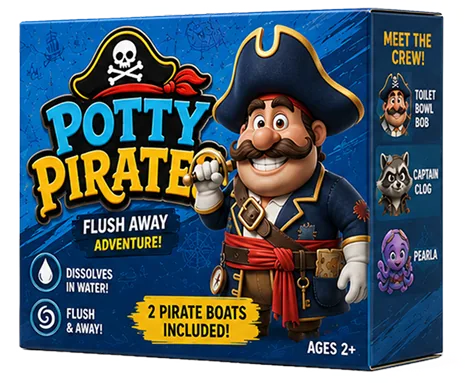
Captain Bob Edition
- A fleet of fizzing, color-changing pirate ships
- Aim-and-dissolve target practice in every bowl
- Non-toxic formula that cleans as it plays
- The whole collectible crew to discover
We'll email you the moment we launch on Kickstarter. No charge today.