
Screen-Free Potty Training Activities to Keep Toddlers Engaged
Practical screen-free potty training activities that keep toddlers focused and engaged. From potty dolls to sticker charts, these ideas work.
Potty training happens in a world full of screens, but the bathroom doesn’t need to be one more place where your toddler zones out in front of a tablet. Screen-free potty training activities keep your child focused, engaged, and actually learning this new skill. Here are activities that work, explained simply.
Read Potty Books Together
Make books a bathroom staple. Keep a basket of potty-themed board books near the toilet or potty chair. Reading together during bathroom time keeps your toddler calm and sitting long enough for something to happen, without the distraction of a screen.
Choose books with simple stories about characters learning to use the potty. Your child will start recognizing the routine and may even request favorite books when it’s time to sit down.
Books also give you something to talk about. Ask your toddler to point to the potty in the pictures or name what’s happening on each page. This keeps them engaged and builds vocabulary around this new skill.
If your child loves a particular character or animal, find potty books featuring them. Familiarity helps.
Practice With Dolls and Stuffed Animals
Let pretend play do the teaching. Set up a toy potty (or use the real one) and show your toddler how their favorite doll or stuffed animal sits on it when they need to go. Narrate the whole process out loud: “Bear says he needs to pee! Let’s help him sit on the potty.”
Then hand the toy to your child and let them take over. Toddlers learn through repetition and imitation. Practicing with toys removes the pressure of their own body and turns the whole thing into a game.
This is especially helpful for children who are nervous about the toilet. When their beloved teddy bear tries it first and nothing scary happens, the real thing feels less intimidating.
You can find more ways to make the whole process feel like play in our guide on how to make potty training fun.
Sing Potty Songs
Music sticks in little brains. Simple, repetitive potty songs help toddlers remember the steps: pull down pants, sit on the potty, wipe, flush, wash hands. Singing the same song every time creates a predictable routine.
You don’t need a perfect voice or fancy lyrics. Make up your own tune about going to the potty, or sing familiar melodies with new potty-themed words. “The Wheels on the Bus” becomes “We’re going to the potty now, potty now, potty now.”
Songs also help pass the time while your child waits on the toilet. A 30-second song gives them a sense of how long to sit without staring at a timer or a screen.
Repetition is key. Sing the same songs consistently so your child learns to associate them with potty time.
Use Sticker Charts and Progress Markers
Visual progress keeps toddlers motivated. Create a simple chart with spaces for stickers. Every time your child tries to use the potty (whether successful or not), they get to add a sticker. The act of choosing and placing the sticker becomes part of the reward.
You can make the chart together. Let your child decorate it with crayons or markers. Hang it where they can see it easily, like on the bathroom door or next to their potty chair.
Keep the goals realistic. Don’t require perfection. Some families give stickers for sitting on the potty, others for successful trips. Decide what makes sense for your child’s current stage.
For more ideas beyond stickers, check out our post on potty training reward ideas.
Play “Potty Race”
Turn urgency into a game. When you notice signs that your toddler needs to go (dancing, holding themselves, sudden stillness), say “Let’s race to the potty!” and make it fun. You can pretend to race slowly, letting them win, or cheer them on as they hustle to the bathroom.
This works especially well for active toddlers who resist stopping play to use the toilet. Racing makes the trip feel like part of the fun, not an interruption.
Keep it light. If your child doesn’t make it in time, no big deal. Try again next time. The goal is building positive associations, not adding pressure.
Decorate the Potty Chair Together
Ownership builds buy-in. Let your child personalize their potty chair with stickers, their name written in marker, or even washable paint (on the outside, obviously). When they feel like the potty is “theirs,” they’re more likely to want to use it.
You can also let them choose where to place it initially. Some toddlers like having the potty in the bathroom near the big toilet. Others prefer starting in the playroom or living room where they spend most of their time.
This small bit of control helps toddlers feel more confident about this big transition.
Create a Bathroom Routine Chart
Pictures show the steps. Draw or print simple images showing each step of using the potty: pull down pants, sit, wipe, flush, wash hands. Hang the chart at your child’s eye level.
Go through the chart together every time your child uses the potty, pointing to each picture as you complete that step. This visual guide helps toddlers remember what comes next without you having to repeat verbal instructions constantly.
You can laminate the chart so it survives bathroom humidity and splashes. Let your child check off each step with a dry-erase marker if they enjoy that kind of interaction.
Use Toilet Targets for Aim Practice
Make aiming into a game, not a chore. For boys learning to stand and aim (and even for girls who want something visual to focus on), toilet targets for potty training turn accuracy into play.
Simple targets can be as basic as a few Cheerios floating in the toilet bowl, or you can use products designed specifically for this purpose. Potty Pirates, for example, are small pirate-ship tablets that fizz and swirl with color when your child aims at them. The immediate visual reward (fizzing, dissolving, color-changing) keeps kids engaged and makes practice feel like a game rather than a task.
Targets are especially helpful for teaching boys to aim in the toilet, but any child benefits from having something specific to focus on while sitting or standing.
Host a “Potty Party” With Family
Let your toddler see how everyone uses the bathroom. Toddlers learn by watching. If they see parents, older siblings, or even visiting relatives using the toilet normally, it demystifies the whole process.
Some families make a lighthearted event out of this. Everyone goes to the bathroom with the door open for a few days. You narrate what you’re doing: “I need to pee, so I’m sitting on the toilet. Then I’ll wipe and wash my hands.”
This isn’t about making bathroom habits weird or uncomfortable. It’s about normalizing a routine that adults do without thinking but toddlers find completely novel.
According to the Mayo Clinic, teaching your child basic bathroom words and routines starting around 18 months helps prepare them for actual potty training later.
Set Up a “Waiting Basket” for Potty Time
Keep hands busy while bodies do their work. Fill a small basket with quiet activities: board books, small toys, simple puzzles, or finger puppets. Keep it within reach of the potty chair or toilet.
When your child sits down to try, they can pull something from the basket to occupy their hands. This helps them relax and stay seated long enough for things to happen naturally.
Rotate items in the basket every few days to keep interest high. You don’t need expensive toys. A favorite stuffed animal, a small car, or even plastic measuring cups can hold a toddler’s attention.
Just avoid anything too engaging. You want your child calm and focused on their body, not deeply absorbed in an elaborate toy that makes them forget why they’re sitting there.
Play Matching Games With Potty-Related Items
Turn supplies into learning tools. Gather pairs of potty-related items: two rolls of toilet paper, two bars of soap, two pairs of training underwear. Spread them out and let your child match them.
This simple game reinforces the vocabulary and tools associated with using the bathroom. It also keeps your toddler thinking about potty training in a playful, low-pressure way during times when they’re not actually on the toilet.
You can extend this by playing “I Spy” in the bathroom. “I spy something we use to wash our hands.” Let your child guess and point.
Create Potty Training “Missions”
Give your toddler specific tasks. Frame potty-related activities as little missions or jobs. “Your mission is to tell me every time you feel like you need to pee today.” Or “Can you help me put fresh toilet paper in the bathroom?”
Toddlers love feeling helpful and capable. Giving them ownership over small pieces of the process builds confidence.
You can write the missions on slips of paper and let your child draw one from a jar each morning. Keep them simple and age-appropriate.
Do Simple Crafts About Potty Time
Make art related to the bathroom. Let your child color pictures of toilets, potties, or kids washing their hands. You can print simple coloring pages or draw them together.
Craft time doesn’t have to be elaborate. Even tearing colored paper and gluing pieces onto a drawing of a potty counts. The goal is keeping potty training visible and positive in your child’s mind, even during non-bathroom hours.
Some families create a “potty training poster” together, decorating it throughout the week as successes happen. Your child might add stickers, stamps, or drawings each time they use the potty.
Have a Potty-Themed Treasure Hunt
Hide potty-related items around one room. You can hide toy toilets, pictures of bathrooms, rolls of toilet paper, or small toys that your child associates with bathroom time. Then send your toddler on a hunt to find them all.
Each time they find an item, talk about what it is and how it relates to using the potty. “You found the soap! We use soap to wash our hands after using the toilet.”
This keeps potty training playful and active. It also reinforces vocabulary and routine without making your child sit still or feel pressured to perform.
For more game-based approaches, explore our list of potty training games toddlers actually enjoy.
Blow Bubbles or Pinwheels While Sitting
Give your child something to do with their breath. Blowing bubbles or spinning a pinwheel while sitting on the potty helps toddlers relax their muscles, which makes it easier for pee or poop to come out.
The act of blowing also distracts from any nervousness about sitting on the toilet. It turns waiting time into something fun rather than something uncomfortable.
Keep a bottle of bubbles or a small pinwheel in the bathroom specifically for potty time. Your child will start associating these items with successful bathroom trips.
Let Your Child “Teach” You
Flip the script. Pretend you’ve forgotten how to use the potty and ask your toddler to teach you. “Oh no, I don’t remember what to do first. Do I pull my pants down? What comes next?”
Let your child guide you through the steps. This reinforces what they’ve learned while giving them a sense of mastery and control.
Toddlers love being the expert. Letting them take the lead builds confidence in their own abilities.
Build Screen-Free Bathroom Rituals
Consistency matters more than variety. You don’t need a dozen different activities. Pick two or three that your child responds to and repeat them consistently. Maybe you always read one book, then sing a song, then give a sticker.
Predictable routines help toddlers feel secure. They know what to expect, which reduces anxiety and resistance.
The American Academy of Pediatrics recommends limiting screen time to no more than one hour per day of high-quality programming for toddlers, and none at all during activities like meals or potty training where focus and body awareness are important.
Screen-free potty training activities keep your child’s attention on their body, the routine, and the connection between feeling the urge and using the toilet. That’s where real learning happens.
The big idea: Screen-free potty training activities keep toddlers focused on their bodies and the new skill they’re learning, turning bathroom time into something engaging rather than something to zone out through.
Sources
Frequently asked questions
The best screen-free potty training activities include reading potty books together, playing pretend with dolls or stuffed animals on a toy potty, singing potty songs, using sticker charts for progress tracking, and letting your child help decorate their potty chair. These activities keep toddlers engaged without relying on tablets or TV.
Make potty training fun by turning it into a game with toilet targets, reading favorite potty books during bathroom time, celebrating successes with special stickers or stamps, and letting your child practice with dolls. Physical activities like races to the potty or helping siblings demonstrate also work well.
Most experts recommend keeping screens out of the bathroom during potty training. Screens can distract toddlers from recognizing body signals and make it harder to connect the physical sensation of needing to go with using the toilet. Screen-free activities help children stay focused on learning this new skill.
While waiting on the potty, your child can look at board books, play with small toys kept in a basket near the toilet, sing songs together, practice counting, or simply chat with you. Keep activities calm and brief so your child stays focused on the task at hand without turning potty time into extended playtime.
Make potty training the part of the day they ask for
- A fleet of fizzing, color-changing pirate ships
- Aim-and-dissolve target practice in every bowl
- Non-toxic formula that cleans as it plays
- The whole collectible crew to discover
We'll email you the moment we launch on Kickstarter. No charge today.
Make potty training the adventure they ask for
Reserve your spot for early access and founding-crew pricing. No payment today.
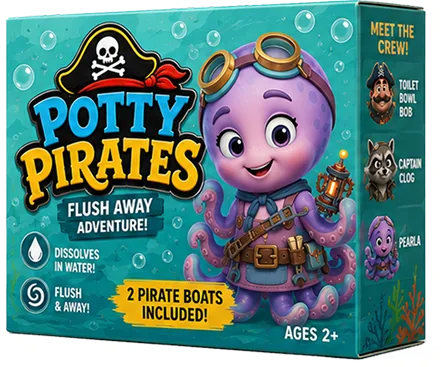
Pearla Edition
- A fleet of fizzing, color-changing pirate ships
- Aim-and-dissolve target practice in every bowl
- Non-toxic formula that cleans as it plays
- The whole collectible crew to discover
We'll email you the moment we launch on Kickstarter. No charge today.