The Best Potty Training Books for Toddlers (That Actually Help)
Real potty training books for toddlers that make learning fun, reduce anxiety, and help kids understand the process. No fluff, just titles that work.
Books won’t potty train your toddler for you. But the right potty training books for toddlers can make the whole process feel less scary, more normal, and genuinely easier for both of you. They introduce the idea gently, give your child language to talk about what’s happening, and turn potty time into something familiar instead of foreign.
Here are the books that actually help, organized by what they do best.
Books to introduce the idea (before you start training)
These are the ones to read in the weeks or months before you begin. They plant seeds without pressure.
Potty by Leslie Patricelli
This board book is short, silly, and gets right to the point. A toddler considers going in their diaper, looks at what the dog and cat do, and decides to try the potty instead. The humor is gentle, the illustrations are bright, and it normalizes the choice without making it a big deal. Perfect for the earliest stage.
P is for Potty! (Sesame Street)
Elmo lifts flaps, sits on the potty, washes his hands, and celebrates. The interactive format keeps toddlers engaged, and Elmo is a character most kids already trust. It walks through the whole routine step by step, which helps kids picture themselves doing the same thing.
Once Upon a Potty by Alona Frankel
This classic has been around for decades, and it’s still one of the most straightforward options. There are separate editions for boys and girls, each showing a simple character learning to use the potty. The tone is matter-of-fact, which some parents love. Others find it a bit dated, but it’s clear and gets the job done.
Books to read during active training
Once you’re in the thick of it, these books help reinforce the routine and keep kids motivated.
Everyone Poops by Taro Gomi
This one’s not specifically about potty training, but it’s weirdly reassuring. It shows that all living things poop, which normalizes the whole process. Some toddlers find it hilarious. Some parents find it useful for kids who are nervous or withholding. It takes the mystery (and sometimes the fear) out of what happens in the bathroom.
Potty Time with Bean (Ms. Rachel)
If your toddler watches Ms. Rachel, this book will feel instantly familiar. It uses real photos and simple text to walk through the potty routine. The gentle, repetitive language mirrors her videos, which can be comforting for kids who already respond to her tone.
Poop or Get Off the Potty! by Margaret McNamara
The title says it all. This one’s funny, direct, and geared toward toddlers who are resisting. It’s not preachy, just silly enough to make the potty seem less intimidating. Good for kids who need a little humor to stay engaged.
Books that make sitting on the potty easier
Keeping a toddler seated long enough for something to happen is one of the trickiest parts. These books help.
Let’s Go to the Potty! by Allison Jandu
This book includes a potty song, which turns the experience into something interactive. Singing while sitting helps kids relax and stay put. The rhythm and repetition make it easy to memorize, so your child might even start singing it on their own.
What Is Poop? by Katie Daynes
A lift-the-flap book that answers real questions toddlers have about poop. It’s educational without being overwhelming, and the flaps give little hands something to do while they sit. Good for curious kids who want to understand the “why” behind the process.
Books for kids who are nervous or resistant
If your toddler is scared of the toilet, resisting sitting down, or dealing with anxiety, these titles can help.
Nope! Not Pooping (A Potty Training Book for Kids Who Won’t Poop on the Potty)
This book is specifically for toddlers who refuse to poop in the potty. It’s gentle, reassuring, and acknowledges the fear without making it worse. If you’re dealing with a toddler holding poop, pair this with patience and zero pressure.
The Potty Book for Boys / The Potty Book for Girls by Alyssa Satin Capucilli
These are simple, affirming stories about a character learning to use the potty. The tone is warm and encouraging. They’re especially helpful for kids who respond well to seeing someone “like them” succeed.
How to actually use potty training books
Reading the book once won’t do much. Here’s what works:
Start early. Read potty books a few months before you plan to train. Let your toddler get familiar with the idea without any expectation to try.
Read them often. Repetition is how toddlers learn. The same book, over and over, plants the routine in their minds.
Keep a few in the bathroom. Books give kids a reason to sit longer, which increases the chance something will actually happen. Choose a couple of favorites and designate them as “potty books.”
Let your child lead. If they want to read the same potty book ten times in a row, let them. If they lose interest, don’t force it. Books are tools, not magic.
Pair books with hands-on tools. Stories introduce the concept. Real practice builds the skill. If you’re teaching a boy to aim, pair books with something physical, like toilet targets. Potty Pirates (fizzing, color-swirling pirate-ship tablets you drop in the bowl) turn aiming into a game that’s way more engaging than just reading about it. The book sets the stage. The fizz and the color make it real.
Books for parents (if you want one)
Most parenting guides on potty training are long, conflicting, and overwhelming. If you want a resource that’s actually useful, look for something evidence-based and short.
The American Academy of Pediatrics Guide to Toilet Training is straightforward and doesn’t oversell any one method. It covers readiness signs, common challenges, and what to do when things don’t go as planned. It won’t tell you there’s one “right” way, which is a relief.
If you’re looking for a faster breakdown, our guide on potty training methods compared walks through the most popular approaches and what fits different kids.
What to skip
Not every popular book is worth your time. Here’s what you can pass on:
Books with too many words. Toddlers lose interest fast. If the book feels more like a lecture than a story, it won’t hold their attention.
Books that shame accidents. Potty training is hard enough without adding guilt. Avoid anything that makes accidents feel like failure.
Books you don’t actually like. You’re going to read these dozens of times. If a book annoys you, your toddler will pick up on it. Choose ones that feel tolerable (or even enjoyable) to read aloud.
When books aren’t enough
Books are great for normalizing the process and giving toddlers language. But they won’t solve every challenge.
If your toddler won’t sit on the potty, books alone won’t fix it. You’ll need to pair them with low-pressure practice and maybe some hands-on incentives.
If your child is afraid of the toilet, books can help, but so can letting them flush toys, decorate the bathroom, or watch you use the toilet without fear.
And if you’re dealing with potty training regression, books won’t reverse it. But they can remind your child that they’ve done this before, and they can do it again.
For more ways to make potty training fun beyond books, try pairing stories with games, songs, or simple rewards that aren’t candy.
The bottom line
Books don’t train toddlers. You do. But the right books make the process feel less overwhelming, give your child a framework to understand what’s happening, and turn something new into something familiar.
Start with one or two that feel right for your kid. Read them often. Keep them near the potty. And remember: the goal isn’t perfection. It’s progress, one page (and one pee) at a time.
The big idea: Potty training books for toddlers won’t do the work for you, but they make the process feel normal, reduce anxiety, and give kids the language and confidence to try.
Sources
Frequently asked questions
You can start reading potty training books a few months before you plan to begin training, even if your child is 18 months or younger. The repetition and visual language help toddlers understand what's coming without pressure to perform. Think of books as prep work, planting seeds long before you pull out the tiny underwear.
Books normalize the potty process and reduce anxiety by letting toddlers see other kids (or characters) learning to use the toilet. They won't magically train your child overnight, but they make the idea less scary and the routine more familiar. Combined with hands-on practice and patience, books are a genuinely helpful part of the toolkit.
Yes, books help kids stay seated long enough for something to happen. Choose a few dedicated "potty books" to keep near the toilet. This makes potty time feel normal and less boring, which is especially helpful for toddlers who resist sitting still.
Look for books with simple, relatable scenarios and characters your child connects with. Boys often respond well to humor and action-based stories. If aiming is a challenge, pair books with hands-on games like toilet targets to make practice fun and engaging.
Make potty training the part of the day they ask for
- A fleet of fizzing, color-changing pirate ships
- Aim-and-dissolve target practice in every bowl
- Non-toxic formula that cleans as it plays
- The whole collectible crew to discover
We'll email you the moment we launch on Kickstarter. No charge today.
Make potty training the adventure they ask for
Reserve your spot for early access and founding-crew pricing. No payment today.
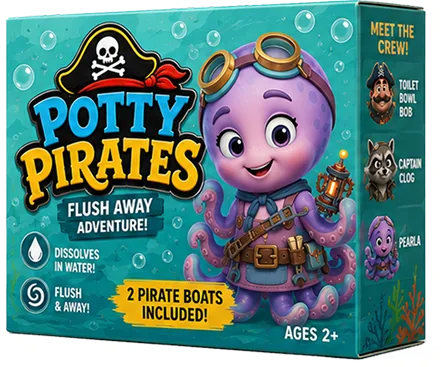
Pearla Edition
- A fleet of fizzing, color-changing pirate ships
- Aim-and-dissolve target practice in every bowl
- Non-toxic formula that cleans as it plays
- The whole collectible crew to discover
We'll email you the moment we launch on Kickstarter. No charge today.