
How Long Does Potty Training Really Take?
Most kids need 3-6 months to potty train, but timelines vary wildly. Here's what actually determines how long it takes, and how to set realistic expectations.
If you’re wondering how long potty training takes, you’re not alone. It’s one of the first questions exhausted parents ask, and the answer is both reassuring and frustrating: it depends. Most kids need about six months from start to finish, but timelines range from a few days to well over a year. What matters most isn’t speed, it’s readiness, consistency, and a calm approach that follows your child’s lead.
What “potty trained” actually means
Before we talk timelines, let’s define success. Potty trained doesn’t mean perfect. For most families, it means your child can recognize the urge to go, make it to the toilet most of the time, and stay dry during the day with only occasional accidents. Nighttime dryness and independent wiping often come much later.
According to UC Davis Health, most children complete potty training by 36 months, with the average process taking about six months. But that’s daytime training. Nighttime control can take months or even years longer, and many kids age five or older still need pull-ups at bedtime.
How long does potty training take? The honest breakdown
Intensive methods (3 days to 2 weeks): Some kids learn the basics quickly, especially if they’re truly ready. The so-called 3-day potty training method can jump-start the process, but it rarely means fully trained in 72 hours. Most families see progress within that window but still spend weeks managing accidents and reinforcing routines.
Gradual approaches (3 to 6 months): This is the most common timeline. Parents introduce the potty, practice regularly, deal with setbacks, and gradually build independence. According to a global study cited by UC Davis, the average is just over six months from start to finish.
Longer timelines (6 months to a year or more): Some kids need extra time, and that’s completely normal. Developmental readiness, temperament, life changes, and even birth order all play a role. Nationwide Children’s Hospital notes it may take up to a couple of years before a child is completely toilet trained, including nighttime dryness.
What actually determines how long potty training takes
Readiness is everything. The American Academy of Pediatrics emphasizes that success depends on physical, cognitive, and emotional readiness, not age. Can your child stay dry for two hours at a time? Follow simple instructions? Communicate when they need to go? If the answer is no, starting early won’t speed things up. In fact, pushing before readiness often backfires, leading to power struggles, anxiety, and longer timelines overall.
Girls tend to train faster. UC Davis notes that girls usually complete toilet training two to three months before boys. Firstborn children also tend to take longer than younger siblings, who benefit from watching an older brother or sister model the behavior.
Your approach matters. Consistency, patience, and positive reinforcement help. Pressure, punishment, and frustration slow things down. If potty training isn’t working, it’s often a sign to pause and try again later, not to push harder.
Life happens. Moves, new siblings, starting daycare, illness, or stress can trigger potty training regression or stall progress entirely. Expect setbacks. UC Davis reports that 80% of families experience them.
Real parent timelines: What to expect
Parents report wildly different experiences. Some say three days with lots of accidents for a month after. Others report weeks of practice before things clicked. A few struggled on and off for a year. The common thread? Progress isn’t linear. Your child might seem trained one week and have accidents daily the next.
If you’re training a boy, aiming often takes extra practice. Teaching a boy to aim in the toilet can feel like a separate skill entirely, and this is where a little playfulness goes a long way. Fizzing, color-swirling toilet targets like Potty Pirates (small pirate-ship tablets you drop in the bowl that turn aiming into a game) can make repetition feel fun instead of tedious, which helps kids practice more willingly.
How to make potty training go faster (without pressure)
Wait until your child shows signs of readiness. Starting at the right time is the single biggest shortcut.
Keep it positive and playful. Making potty training fun with games, songs, and simple rewards keeps kids motivated without bribes or battles. Potty training games and screen-free activities give kids something to look forward to.
Be consistent. Set regular potty times (after meals, before naps, first thing in the morning). Consistency builds routine, and routine builds confidence.
Accept accidents calmly. Mayo Clinic reminds parents that accidents are inevitable and punishment has no role in the process. Clean up matter-of-factly, reassure your child, and move on.
Consider your method. Different potty training methods work for different families. Child-led training takes longer but feels gentler. Intensive methods work if your child is ready and you can commit the time. Choose what fits your child and your life, not what worked for someone else’s kid.
When nighttime dryness happens
Daytime and nighttime training are separate milestones. Most kids stay dry during the day months or even years before they’re dry at night. The AAP notes that children may stay dry during the day by 30 to 36 months but need pull-ups at bedtime until age five or older. For a deeper dive, see our guide to nighttime potty training.
What if it’s taking longer than expected?
If your child is over four and still struggling, or if you’re seeing resistance, fear, or withholding, check in with your pediatrician. Sometimes constipation, developmental delays, or anxiety need support. More often, the issue is timing. If your child won’t sit on the potty, is afraid of the toilet, or holds poop consistently, take a break. A few weeks off can reset the dynamic and make round two much easier.
The role of playfulness in sticking with it
One reason some kids train faster? They stay engaged. Boredom, resistance, and battles slow things down. This is where small doses of playfulness help. A color-changing tablet or pirate-ship fizzer in the bowl gives kids a reason to aim, practice, and try again without you nagging. Potty Pirates turn repetition into a game: aim, fizz, color-swirl, dissolve. It’s not magic, but it keeps toddlers curious and willing, which over weeks and months, adds up.
Bottom line: How long does potty training really take?
Most kids take three to six months to become reasonably independent during the day. Some need more, some need less. What you can control is your approach: start when your child is ready, stay calm through setbacks, keep it playful, and trust the process. Speed isn’t the goal. Confidence, independence, and a shame-free experience are.
The big idea: Potty training timelines vary wildly, but readiness, consistency, and a patient approach matter far more than speed. Most kids need about six months, and that’s completely normal.
Sources
Frequently asked questions
Most children take about six months from start to finish, though timelines vary widely. Some kids pick it up in just a few days, while others need a year or more to feel confident and stay consistently dry during the day.
The 3-day method can jump-start learning if your child is truly ready, but it rarely means fully trained in three days. Most families see progress within that window but still need weeks or months of practice before accidents stop and routines become second nature.
About 90% of children are dry most days by age three, and most are reliably trained by age four. The average age parents begin training has shifted to between 21 and 36 months, with many kids not fully independent until well into their third or fourth year.
Yes, on average. Girls tend to complete daytime training two to three months earlier than boys, though every child is different and readiness matters more than gender.
Make potty training the part of the day they ask for
- A fleet of fizzing, color-changing pirate ships
- Aim-and-dissolve target practice in every bowl
- Non-toxic formula that cleans as it plays
- The whole collectible crew to discover
We'll email you the moment we launch on Kickstarter. No charge today.
Make potty training the adventure they ask for
Reserve your spot for early access and founding-crew pricing. No payment today.
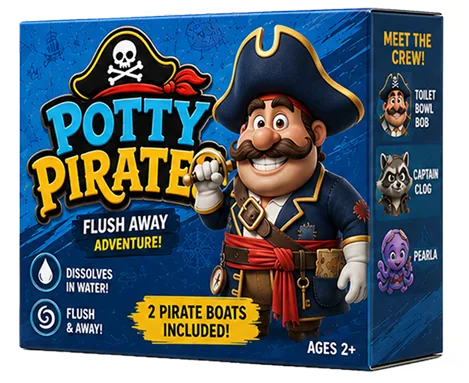
Captain Bob Edition
- A fleet of fizzing, color-changing pirate ships
- Aim-and-dissolve target practice in every bowl
- Non-toxic formula that cleans as it plays
- The whole collectible crew to discover
We'll email you the moment we launch on Kickstarter. No charge today.