
Child-Led Potty Training: What It Is and How to Do It
Child-led potty training lets toddlers take the lead when they're ready. Learn what it is, why it works, and how to support your child through this milestone without pressure or power struggles.
Child-led potty training flips the script. Instead of picking a date, clearing your calendar, and launching a three-day boot camp, you watch and wait. You introduce the idea, model the behavior, and make the tools available. Then you step back and let your toddler take the lead. It sounds counterintuitive in a culture that loves structure and timelines, but for many families, it’s the path of least resistance.
This approach trusts that children are wired to want this independence. They see you use the toilet. They notice their friends staying dry. And when their bodies and brains are ready, they’ll make the leap, often with far fewer accidents and power struggles than parent-driven methods produce.
What child-led potty training actually means
Child-led potty training (sometimes called “potty learning”) is exactly what it sounds like: your child sets the pace. You’re not training them like you’d train a puppy. You’re supporting a developmental process they’re already motivated to master.
You start by teaching the basics. Use simple words like “pee,” “poop,” and “potty.” Point out when your child shows signs of needing to go (squatting, hiding, tugging at their diaper). Introduce a potty chair and explain what it’s for. Let your child sit on it fully clothed, no pressure.
The difference is in who decides when to ditch the diapers. In child-led training, that’s your toddler’s call. You don’t announce a start date or push them to perform. You wait until they start asking to use the potty, telling you when they need to go, or showing clear frustration with diapers. Then you follow their lead.
It’s slower than intensive methods. It requires more patience. But it avoids the battles, the shame, and the regression that often follow when a child isn’t developmentally ready.
Why child-led potty training works (the science and psychology)
Children are biologically driven to reach milestones. Walking, talking, self-feeding, and yes, using the toilet are all things toddlers want to do on their own. They’re hardwired to seek independence and imitate the adults they love. When we honor that intrinsic motivation instead of overriding it with rewards or pressure, the process tends to stick.
Potty training requires three big developmental pieces to click into place. First, physical readiness: your child needs bladder and bowel control, which typically develops between 18 and 36 months. Second, cognitive readiness: they must recognize the urge to go, connect it to the toilet, and remember the steps involved. Third, emotional readiness: they need to feel safe, capable, and willing to let go of the comfort and convenience of diapers.
Rushing any of these pieces can backfire. According to the American Academy of Pediatrics, pushing toilet training before a child is ready can lead to resistance, accidents, constipation, and even urinary tract infections. On the other hand, waiting until all three pieces align often results in a faster, smoother transition.
Child-led training also sidesteps power struggles. Toddlers are famous for asserting control over the few things they can: what goes in their mouth, what comes out of their body, and when. When you make potty training a battle, you’ve already lost. When you make it their choice, they win, and so do you.
How to use child-led potty training well
Start with the groundwork (before they’re ready)
Introduce bathroom vocabulary early. By 18 months, start using words like “pee” and “poop” without shame or disgust. Point out when you notice your child needs to go. Invite them to come with you to the bathroom and explain what you’re doing.
Make the potty part of the landscape. Place a potty chair in the bathroom (or wherever your child spends the most time) and let them explore it. Let them sit on it clothed while you read a book. Let their stuffed animals have a turn. The goal is familiarity, not performance.
Watch for readiness signs
You’re looking for a cluster of clues, not just one. Can your child:
- Stay dry for two or more hours at a time?
- Signal when they need to go (words, gestures, or a potty dance)?
- Pull their pants up and down?
- Follow simple instructions?
- Express interest in using the toilet or wearing underwear?
- Walk to the bathroom and sit on the potty independently?
If you’re checking most of those boxes, your child might be ready to start. If not, wait. There’s no prize for finishing first, and you can find more guidance on when to start potty training if you’re unsure.
Let them lead, then support
Once your child starts asking to use the potty or tells you they need to go, respond immediately and enthusiastically. Help them get there quickly. Celebrate effort, not just results. If they sit and nothing happens, that’s still practice.
Offer the potty at natural transition times (after meals, before leaving the house, after naps), but frame it as an invitation, not a command. “Let’s go try the potty!” works better than “Do you need to go?” (which will always be answered with “no”).
Accidents are part of the process. Stay calm. Clean up together. Remind your child where pee and poop go, and move on. Never shame, punish, or show frustration. That only teaches them to hide accidents or hold it in, which can lead to constipation or anxiety.
Make it engaging without turning it into a transaction
You don’t need candy or sticker charts to make potty training work, but a little fun doesn’t hurt. For boys learning to aim, a floating target can turn practice into a game. Potty Pirates (fizzing, color-swirling pirate-ship toilet tablets that dissolve when hit) turns the mechanics of aiming into something toddlers actually want to do, over and over. It’s not a bribe. It’s just making the task itself more interesting, which keeps motivation intrinsic.
If you’re looking for other ways to keep things light, check out ideas for how to make potty training fun or screen-free activities that don’t rely on rewards.
Be patient with the timeline
Child-led potty training often takes longer than intensive methods. That’s okay. You’re trading speed for sustainability. Some kids train in a few weeks once they start. Others take months. Both are normal.
Nighttime dryness usually comes later (sometimes years later), and that’s purely physiological. Keep nighttime diapers or pull-ups on without shame until your child wakes up dry consistently. You can read more about nighttime potty training when the time comes.
What to do when child-led training stalls
Sometimes interest fades. Your child was excited about the potty, and now they’re not. That’s normal. Don’t push. Take a break. Go back to diapers for a few weeks. Reintroduce the potty casually when things settle.
Regression happens, especially during stress. A new sibling, a move, starting preschool, all of these can derail progress. Respond with empathy, not pressure. Check out our guide on potty training regression if you’re stuck.
If your child refuses to sit on the potty or seems scared, don’t force it. Fear of the toilet is real and common. You can learn more about helping a toddler who’s afraid of the toilet. Similarly, if your child is holding poop and seems uncomfortable, that’s a sign to slow down and get support. Our guide on toddler poop withholding can help.
And if you’re dealing with outright resistance? That’s usually a readiness issue or a power struggle. Our post on potty training a stubborn toddler walks through how to reset without turning it into a war.
Safety and honesty notes
Child-led potty training works beautifully for many families, but it’s not the only valid approach. Some children do better with more structure. Some parents need their child trained by a certain date for daycare or preschool. That’s real life, and it’s okay to adapt.
The goal isn’t purity. The goal is a trained child and an intact parent-child relationship. If following your child’s lead starts to feel like you’re doing nothing and your child is three and a half with zero interest, it’s worth checking in with your pediatrician to rule out developmental delays or medical issues.
Also, child-led doesn’t mean hands-off. You’re still teaching, modeling, reminding, and supporting. You’re just not controlling the timeline or coercing cooperation.
If you want to compare approaches, our post on potty training methods lays out the options side by side so you can choose what fits your family.
The big idea: Child-led potty training works because it trusts what toddlers already want, to grow up, be independent, and do what the big kids do. Your job is to teach the mechanics, provide the tools, and get out of the way.
Sources
Frequently asked questions
There's no single right age. Most children show readiness signs between 18 and 36 months, but some wait longer. The key is waiting until your child demonstrates physical, cognitive, and emotional readiness rather than following a timeline. Girls often complete training earlier than boys, but every child moves at their own pace.
Child-led potty training follows your toddler's cues instead of a parent-driven schedule. You introduce the concept, model the behavior, and make the potty available, but your child decides when to start using it consistently. There's no pressure, rewards, or training timeline. This approach trusts that children are naturally motivated to reach this milestone when they're developmentally ready.
Lack of interest usually means your child isn't ready yet, and that's completely normal. Keep the potty visible, continue talking casually about bathroom habits, and wait. Pushing before readiness often backfires and can lead to resistance, accidents, or withholding. Most children eventually show interest when their bodies and brains are prepared for the transition.
External deadlines can complicate child-led training, but it's still possible to honor your child's pace while working toward a goal. Start introducing the potty earlier, offer more frequent gentle invitations to try, and communicate openly with the preschool about your approach. Many programs are more flexible than parents expect, and rushing rarely helps anyone.
Make potty training the part of the day they ask for
- A fleet of fizzing, color-changing pirate ships
- Aim-and-dissolve target practice in every bowl
- Non-toxic formula that cleans as it plays
- The whole collectible crew to discover
We'll email you the moment we launch on Kickstarter. No charge today.
Make potty training the adventure they ask for
Reserve your spot for early access and founding-crew pricing. No payment today.
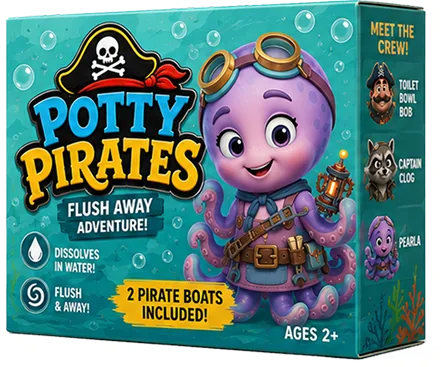
Pearla Edition
- A fleet of fizzing, color-changing pirate ships
- Aim-and-dissolve target practice in every bowl
- Non-toxic formula that cleans as it plays
- The whole collectible crew to discover
We'll email you the moment we launch on Kickstarter. No charge today.