
How to Teach a Toddler to Wipe (Properly and Independently)
Step-by-step guide to teaching your toddler to wipe safely and effectively. Learn when to start, what techniques work, and how to handle the bumps along the way.
Your child can finally use the potty. Victory! Except now you’re staring down the next (messy, awkward) frontier: teaching them how to wipe. No one warns you about this part. You’ve conquered pee and poop, made potty training fun, maybe even survived a few stubborn battles. But now? Now you need to teach a tiny human with questionable fine motor skills to clean their own bottom. Here’s how to do it, step by step, without losing your mind.
When to Start Teaching Your Toddler to Wipe
Don’t rush this step. Most children aren’t physically ready to wipe independently until around age 3 or 4, and many need help well into age 5 or beyond. That’s completely normal.
Before you start teaching, your child should be able to:
- Reach their bottom comfortably (either while sitting or standing)
- Understand basic directions
- Have enough hand strength and coordination to hold and use toilet paper
If your child is still working on potty training itself, focus there first. Wiping is an advanced skill. According to the American Academy of Pediatrics, toilet training is a process that involves both body and mind, and each piece builds on the last.
Step 1: Start With the Basics (Before Actual Wiping)
Before your toddler touches toilet paper, they need to understand what wiping is for and why it matters.
Talk about it simply: “After we poop, we need to clean our bottom so it stays healthy and doesn’t itch.” Use words they understand. Keep it matter-of-fact, not gross or shameful.
Show them the motion using a stuffed animal or doll. Let them practice wiping the toy’s bottom with a wipe or piece of toilet paper. This makes it a game, not a chore, and helps them understand the mechanics without the pressure of doing it perfectly on themselves.
If you’re teaching a girl, introduce the front-to-back rule early. Say it simply: “We always wipe from front to back, toward our bottom, not the other way.” This prevents urinary tract infections and needs to become automatic.
Step 2: Practice With Help (Supervised Wiping)
Now it’s time for your child to try on themselves, with you right there.
Hand them the toilet paper and let them make the first attempt. Guide their hand if needed. Most kids need help understanding how much pressure to use (not too hard, not too soft) and how to actually reach the right spot.
Here are a few positions that work well:
- Sitting and leaning forward on the potty (most stable for younger toddlers)
- Standing and bending slightly (easier for some kids to reach)
- Touching toes while standing (this naturally spreads the cheeks a bit and can make wiping easier)
Let them try what feels most comfortable. There’s no single “right” way, as long as they’re getting clean.
Use flushable wipes at first if regular toilet paper feels too tricky. Wipes are easier to control, more effective, and gentler. Just make sure they’re truly flushable and dispose of them properly.
For boys who are also learning to aim, tools like Potty Pirates (fizzing pirate-ship toilet targets that dissolve in the bowl) can keep the potty experience playful and positive during this learning phase. More on teaching boys to aim here.
Step 3: Teach the “How Much Paper” Skill
Toddlers are notorious for unrolling half the toilet paper roll. It’s basically a rite of passage.
Show them how to measure. Count out 3 to 4 squares together, or fold a small stack. Some parents pre-tear the amount and hand it to their child until they get the hang of it.
Practice tearing and folding as separate skills. Let them tear paper off the roll a few times (not during an actual bathroom trip) so they understand the motion. Then show them how to fold or crumple it into a manageable wad.
Be patient. This part is legitimately hard for small hands.
Step 4: The “Check Your Work” Habit
Once your child has wiped, teach them to look at the toilet paper before tossing it. If it’s still dirty, they need to wipe again.
This is how they learn when they’re actually done. It’s gross to us, but it’s practical for them.
You’ll still need to double-check for a long time. After they finish, ask, “Can I take a look to make sure you got everything?” Stay calm and helpful. If they missed a spot, just hand them more paper and guide them through another wipe. No shame, no frustration.
This stage can last months (sometimes a year or more). That’s okay.
Step 5: Build Toward Full Independence
As your child gets better at wiping, gradually step back. Instead of doing it for them or guiding their hand, stand nearby and coach with words. “Remember to wipe front to back.” “Did you check the paper?”
Celebrate progress, not perfection. Every successful wipe (even if you still helped a little) is a win.
If your child resists or gets frustrated, don’t force it. Some kids are ready earlier, some later. Pushing too hard can backfire and create potty training regression.
Keep the bathroom stocked with everything they need: toilet paper within easy reach, a sturdy step stool if they need it, and maybe a gentle reminder chart on the wall (wipe, flush, wash hands).
Special Considerations for Boys vs. Girls
For girls: Front-to-back is non-negotiable. Reinforce this every single time until it’s automatic. Wiping the wrong direction can push bacteria toward the urethra and cause infections.
For boys: Wiping after pee isn’t always necessary (a shake or two usually does it), but wiping after poop is. Boys often wipe standing up and bending forward, which works fine. If your son is still mastering aim, combining toilet targets with wiping practice can keep motivation high.
More detail on approach differences in our guides for potty training boys and potty training girls.
What About Flushable Wipes?
Flushable wipes can be a great bridge between diapers and full independence. They’re easier to use, more effective at cleaning, and gentler on sensitive skin.
Just make sure the brand you choose is truly flushable (breaks down in water) and teach your child to use only one or two at a time. Some kids find wipes less intimidating than dry toilet paper, especially at the start.
You can always transition back to regular toilet paper once they’ve mastered the motion.
When Wiping Just Isn’t Clicking
If your child is over 4 or 5 and still struggling significantly with wiping, talk to your pediatrician. Occasionally, issues with fine motor skills, flexibility, or sensory processing can make this harder than it should be.
Also check in if:
- Your child is avoiding pooping because wiping is difficult or uncomfortable
- You notice frequent rashes, itching, or signs of incomplete cleaning
- Your child seems physically unable to reach, even with different positions
Most of the time, it’s just a matter of time and practice. But it’s always okay to ask for help. According to HealthyChildren.org, toilet training (including wiping) varies widely by child, and there’s no single “normal” timeline.
The Bottom Line (Pun Intended)
Teaching a toddler to wipe is awkward, messy, and takes way longer than you think it will. But it’s also a huge step toward independence, for both of you.
Start when they’re ready, not when the calendar says so. Practice with patience. Use wipes if they help. Teach front-to-back for girls, every time. And remember: you’ll be double-checking their work for a while, and that’s completely normal.
One day, sooner than you think, they’ll close the bathroom door and handle it all themselves. Until then, keep some extra toilet paper stocked and a sense of humor handy.
The big idea: Teaching your toddler to wipe takes time, patience, and lots of practice. Start when they’re physically ready, use simple coaching, and don’t rush independence, most kids need help until age 5 or beyond, and that’s perfectly normal.
Sources
Frequently asked questions
Most children begin learning to wipe between ages 3 and 4, but full independence usually doesn't happen until ages 4 to 5 or later. Readiness depends on your child's fine motor skills, ability to reach comfortably, and understanding of the process. Start practicing when they show interest, but expect to help for a while.
Most experts recommend teaching toddlers to wipe while still sitting on the toilet, leaning slightly forward. This position is safer and more stable for young children. Some toddlers find it easier to stand and bend forward slightly, which can work too, especially as they gain coordination.
For girls especially, front-to-back wiping is essential to prevent urinary tract infections. Use simple language like 'wipe toward your bottom, not toward your front.' Practice the motion with a doll or stuffed animal first, and supervise closely until the habit is solid.
This is completely normal. Show your child how to count out squares (3-4 is usually enough) or fold a small stack. You can also pre-tear the right amount and hand it to them until they get the hang of it. Be patient, this skill takes time.
Make potty training the part of the day they ask for
- A fleet of fizzing, color-changing pirate ships
- Aim-and-dissolve target practice in every bowl
- Non-toxic formula that cleans as it plays
- The whole collectible crew to discover
We'll email you the moment we launch on Kickstarter. No charge today.
Make potty training the adventure they ask for
Reserve your spot for early access and founding-crew pricing. No payment today.
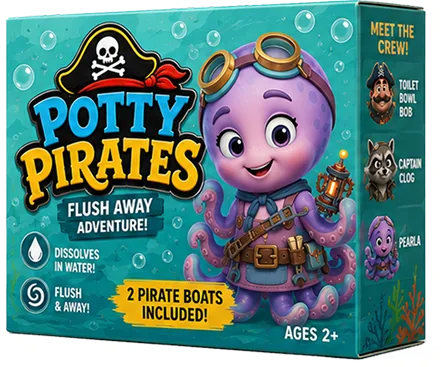
Pearla Edition
- A fleet of fizzing, color-changing pirate ships
- Aim-and-dissolve target practice in every bowl
- Non-toxic formula that cleans as it plays
- The whole collectible crew to discover
We'll email you the moment we launch on Kickstarter. No charge today.