
When Your Toddler Refuses to Poop in the Potty
Your toddler pees in the potty but refuses to poop there? You're not alone. Learn the real reasons why, plus calm fixes that work without battles or shame.
You’ve hit a potty training milestone: your toddler pees in the potty like a champ. But when it’s time to poop? Suddenly, they’re hiding behind the couch, begging for a diaper, or holding it in for days. If your toddler refuses to poop in the potty, you’re not failing. You’re dealing with one of the most common (and most frustrating) parts of potty training.
This isn’t stubbornness. It’s not a power struggle you’re losing. It’s a real developmental hurdle, and understanding why it happens is the first step to helping your child get past it without tears, battles, or shame.
Why toddlers refuse to poop in the potty
Your child understands what the potty is for. They’ve proven they can control their body. So why won’t they just finish the job?
Fear is often the biggest reason. Some kids are scared they’ll fall into the toilet, especially if they’ve slipped on an adult seat or heard a loud automatic flush. Others are afraid of the sensation of poop falling away from their body, or worried that something important is leaving them forever.
Pain from past bowel movements can also trigger poop refusal. If your child had one hard, uncomfortable poop (maybe during a diet change or a bout of constipation), their brain might have filed “pooping = pain” into long-term memory. Now they’re doing everything they can to avoid a repeat.
Control and readiness matter, too. Toddlers are just beginning to realize they have power over their own bodies. Pooping is one of the few things you truly can’t force. If potty training started during a phase of defiance or before your child was emotionally ready, poop refusal may be their way of saying, “I’m not ready yet.”
Some children also resist because they simply don’t want to grow up. Pooping in a diaper feels safe and familiar. Using the toilet means becoming a “big kid,” and not every toddler is ready to let go of being little.
Figure out the why before you fix it
Before you jump to solutions, take a step back and watch for clues. Is your child scared? Do they cry, cling, or refuse to sit on the toilet? Are they in pain? Hard stools, straining, or visible discomfort point to constipation. Are they withholding on purpose? Holding still, hiding, or doing a “poop dance” are signs they’re trying not to go.
If constipation is part of the picture, you’ll need to address that first. Constipation and poop refusal create a vicious cycle: the longer your child holds it, the harder and more painful the stool becomes, which makes them even more determined not to poop. You can learn more about that specific challenge in our guide to toddlers holding poop.
If fear is the issue, look for patterns. Does your child only refuse at certain toilets? Are they fine with a small potty chair but terrified of the big toilet? Do they panic when they hear the flush?
If it’s a control or readiness issue, you’ll notice your child asking for a diaper, waiting until nap time, or simply ignoring the urge altogether.
What to do when your toddler refuses to poop in the potty
Once you understand the root cause, you can meet your child where they are and guide them forward without pressure.
If fear is the issue
Make the potty feel safe. Use a small, floor-level potty chair instead of a seat on the big toilet. Let your child’s feet rest flat on the ground. If you’re using a toilet seat reducer, add a sturdy step stool so they feel stable and supported.
Let them stay in control of the flush. If the sound scares them, wait until they leave the bathroom to flush. Some kids feel better if they get to push the lever themselves.
Normalize the process. Read potty books together. Let them watch you (if they’re interested). Talk about poop in simple, matter-of-fact terms: “Everyone poops. It’s what our bodies do. The poop goes in the potty, and then we flush it away.”
You might also explore ways to make potty training fun without adding pressure. A little fizzing pirate ship tablet that swirls color in the toilet bowl (like Potty Pirates) can turn a scary toilet into something curious and playful, especially for kids who respond well to visual games.
If pain or constipation is the problem
Talk to your pediatrician first. If your child’s stools are hard, dry, or painful, you may need help from a doctor to get things moving again. They might recommend a stool softener, more water, or changes to your child’s diet.
Don’t push potty use until the pain is gone. Forcing a child to sit on the potty when they’re constipated will only make the fear worse.
Focus on comfortable pooping, wherever that happens. If your child needs a diaper to feel safe enough to poop, give them the diaper. You can keep it in the bathroom and work toward the potty later, once pooping no longer hurts.
If it’s about control or readiness
Pause and reassess. If your child isn’t emotionally ready, pushing harder won’t speed things up. It will just make everyone miserable. Consider taking a break from active potty training for a week or two, then try again with a calmer approach.
Offer choices, not commands. Let your child pick their potty seat, choose their underwear, or decide whether to sit or stand (for boys). Even small choices help them feel like they’re in the driver’s seat.
Keep the diaper routine in the bathroom. If your child asks for a diaper to poop, put it on in the bathroom and have them stay there. Over time, you can move toward sitting on the potty with the diaper on, then eventually without it. This gradual approach, recommended by pediatric specialists, respects your child’s pace while gently moving them toward the goal.
Celebrate every step forward. Did they tell you they needed to poop? Praise that. Did they sit on the potty, even if nothing happened? That’s progress. Did they poop in a diaper in the bathroom instead of behind the couch? That counts, too.
Consider pairing progress with a system that doesn’t lose steam. Our post on potty training sticker chart alternatives has ideas that keep motivation going longer than traditional charts.
Make sitting more comfortable and effective
Positioning matters more than most parents realize. When your child’s feet dangle or their knees are lower than their hips, it’s harder for their body to relax and release. Use a stool to support their feet and lean them slightly forward. This “squatty” position makes pooping easier and less scary.
Use distraction and calm. Let them look at a book, blow bubbles, or sing a song while they sit. The goal is to take the pressure off and help their body relax. Blowing bubbles is especially helpful because the breathing pattern can actually help things move along.
When to check in with your pediatrician
Most poop refusal resolves with time, patience, and the right support. But some situations need a doctor’s help.
Call your pediatrician if:
- Your child is withholding poop for three or more days at a time
- Bowel movements are consistently hard, dry, or painful
- You see blood in the stool or on the toilet paper
- Your child is over age four and still refusing to poop in the potty
- The refusal is causing significant distress for your child or disrupting daily life
- You suspect an underlying medical issue, like a food sensitivity or digestive problem
Your pediatrician can rule out constipation, check for other physical causes, and help you create a plan that works for your child’s specific needs.
What not to do
When you’re exhausted and your toddler has been asking for a diaper for the tenth day in a row, it’s tempting to try anything. But some approaches make the problem worse.
Don’t punish, shame, or scold. Poop refusal isn’t defiance. It’s fear, discomfort, or a readiness gap. Punishment will only deepen the resistance and damage your child’s trust.
Don’t force them to sit on the potty. Holding your child down or making them stay until they poop can create real trauma around toileting. It can also lead to withholding and constipation.
Don’t compare them to other kids. Every child’s timeline is different. Telling your child that their friend or sibling is already potty trained will only make them feel like they’re failing.
Don’t let frustration show. Your child is watching your reactions closely. If they sense you’re upset, disappointed, or stressed, they’ll internalize that and feel even more pressure, which makes the problem worse.
Keep the big picture in mind
Potty training doesn’t happen on a schedule. It happens in stages, setbacks, and small wins that add up over time. If your toddler refuses to poop in the potty, it doesn’t mean you’re doing it wrong. It means they need more time, more support, or a different approach.
Stay calm. Stay consistent. Celebrate progress, no matter how small. And remember: every child gets there eventually.
For more support on other tricky moments, check out our guides on toddlers who won’t sit on the potty, potty training regression, and why potty training isn’t working.
The big idea: When your toddler refuses to poop in the potty, it’s not defiance. It’s fear, discomfort, or a sign they’re not quite ready. Meet them where they are, stay patient, and trust the process.
Sources
Frequently asked questions
This is one of the most common potty training challenges. Your child may be afraid of falling in, scared of the flush, worried about pain from a past hard stool, or simply not ready to give up this last piece of control. It's a normal phase, not a sign of failure.
Every child is different. Some kids poop in the potty within days of mastering pee, while others take weeks or even months. Pushing too hard can backfire, so patience and staying calm are key to progress.
Yes, at least for now. Forcing them to poop on the potty before they're ready can lead to withholding, constipation, and bigger problems. Keep the diaper routine in the bathroom, and gradually work toward the potty as they build confidence.
Check in with your pediatrician if your child is withholding poop for three or more days, has hard or painful bowel movements, shows blood in the stool, is over age four and still refusing, or if the refusal is causing major distress for your child or family.
Make potty training the part of the day they ask for
- A fleet of fizzing, color-changing pirate ships
- Aim-and-dissolve target practice in every bowl
- Non-toxic formula that cleans as it plays
- The whole collectible crew to discover
We'll email you the moment we launch on Kickstarter. No charge today.
Make potty training the adventure they ask for
Reserve your spot for early access and founding-crew pricing. No payment today.
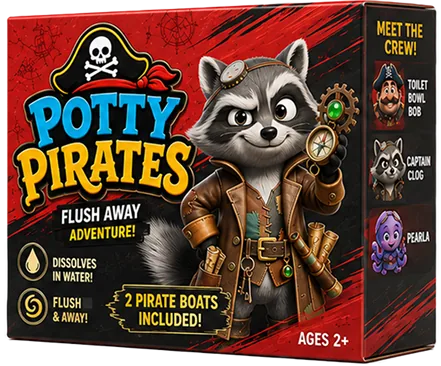
Captain Clog Edition
- A fleet of fizzing, color-changing pirate ships
- Aim-and-dissolve target practice in every bowl
- Non-toxic formula that cleans as it plays
- The whole collectible crew to discover
We'll email you the moment we launch on Kickstarter. No charge today.